

Views: 0 Author: Site Editor Publish Time: 2026-10-29 Origin: Site


Managing a single forecourt is an operational headache. Scaling that operation to dozens of locations is a logistical minefield. For multi-site operators, inconsistent data reconciliation, untracked fuel shrinkage, and fragmented customer profiles silently drain profit margins. To permanently eliminate these inefficiencies, deploying a robust gas station management system is no longer just an optional upgrade. It acts as the central nervous system of your entire enterprise. This guide breaks down the critical architecture multi-site retailers must deploy to streamline workflows, enforce strict compliance, and protect their bottom line.
The global fuel retail sector is facing unprecedented pressure. With the steady adoption of electric vehicles and highly volatile wholesale oil margins, traditional pump profits are shrinking. How are top-tier operators surviving this transition? They are aggressively pivoting. Gas stations are rapidly transforming into comprehensive mobility hubs where convenience retail and quick-service food drive the actual net revenue.
This massive market shift requires a complete overhaul in site technology. Legacy software simply cannot handle the high-speed data exchange needed for hyper-personalized loyalty programs or dynamic pricing models. Recent market analyses show a definitive migration toward cloud-based, AI-driven architectures. Without predictive analytics and automated alerts, competing against modern mega-convenience chains is mathematically impossible.
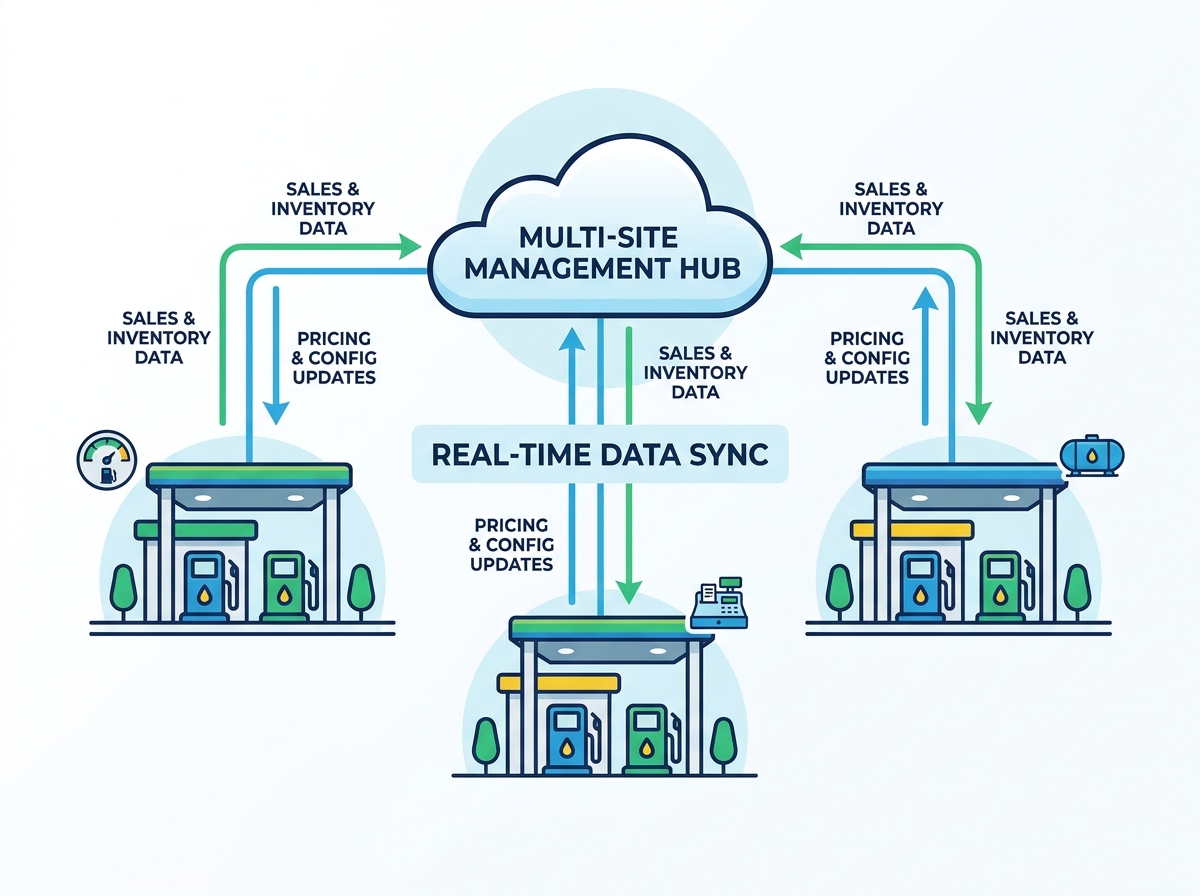
Consider a regional manager trying to pull end-of-shift reports from fifteen different stations. If those sites use fragmented, on-premise servers, isolated data silos are inevitable. Manual spreadsheet consolidation leads to delayed decisions and expensive data entry errors.
A centralized dashboard changes the operational game entirely. By leveraging secure cloud architecture, managers gain a real-time, bird’s-eye view of the entire network. You can instantly push universal fuel price updates, modify digital menus, or deploy critical security patches to every single site simultaneously. This transition moves your operation from reactive firefighting to proactive network optimization.
Fuel is your most capital-intensive asset. Relying on manual dipsticks is outdated, inaccurate, and dangerous. A modern, industrial-grade Fuel Station Management System seamlessly integrates with high-precision magnetostrictive probes. Precision is non-negotiable here.
Specifically, operators should demand systems capable of detecting water levels with an accuracy of ±0.1mm and measuring fuel volumes within a strict ±0.5 percent margin of error. This continuous monitoring automatically reconciles the volume delivered against the exact volume dispensed at the nozzle. It effectively eliminates the invisible shrinkage caused by temperature expansion, meter drift, or outright theft. Furthermore, automated environmental monitoring prevents catastrophic soil contamination, keeping your business safe from crippling regulatory fines.
To understand the operational gap between old and new technologies, review the fundamental differences in system architecture.
| Operational Feature | Legacy Isolated Systems | Modern Multi-Site Platforms |
|---|---|---|
| Data Synchronization | Manual, end-of-day batch processing | Real-time cloud synchronization |
| Pricing Updates | Site-by-site manual entry | One-click global deployment |
| Shrinkage Control | Reactive, often delayed by weeks | Proactive, minute-by-minute reconciliation |
| Hardware Compatibility | Vendor-locked, proprietary cabling | Open protocols like IFSF and DOMS |
The barrier between the fuel pump and the cash register must be destroyed. Gasoline brings cars to the lot, but the convenience store generates the actual profit margin. Unifying Point of Sale data into a single, centralized database is a strict requirement for survival.
By analyzing intertwined purchase patterns, management unlocks serious cross-selling power. For example, if empirical data shows a high percentage of morning commuters buy premium unleaded fuel and hot coffee, the system can automatically trigger a digital promotional bundle on the pump screen. This localized marketing incentivizes fuel-only customers to walk inside, directly increasing the Average Transaction Value.
How do you actually choose the right infrastructure? Do not settle for generic marketing buzzwords. Evaluate your tech stack against hard engineering standards.
First, verify protocol support. Your software must speak the exact same language as your existing dispensers and tank gauges. Look for native support for industry standards like IFSF or standard serial communication. Second, demand hybrid edge-cloud architecture. If the local internet connection drops, your site must still process transactions locally and automatically sync the data once the connection is restored. High availability is a strict operational requirement, not an optional add-on.
Upgrading your technology stack is the only proven way to scale a fuel retail network sustainably. Centralized control, automated inventory reconciliation, and robust data analytics are the foundational pillars of a highly profitable multi-site operation. Stop losing margin to inefficient legacy software and untracked inventory shrinkage. Evaluate your current infrastructure today and upgrade to a high-performance fuel station management system designed to protect your physical assets and accelerate your enterprise growth.
The primary benefit is unified data visibility. It allows operators to manage pricing, inventory, and staff reporting for all sites from one central hub. This eliminates the need to physically visit individual locations or manually consolidate error-prone spreadsheets, drastically reducing administrative overhead.
By integrating automated tank gauges with real-time sales data, the system immediately highlights discrepancies between delivered fuel and dispensed fuel. This continuous, minute-by-minute reconciliation allows owners to identify physical leaks, calibration errors, or active theft the moment they occur.
Yes. Leading enterprise platforms are specifically engineered to bridge the gap between the forecourt and the convenience store. They unify transaction data, allowing for precise inventory tracking of retail items and ensuring a single, accurate view of total site profitability.
Edge computing ensures high availability. It allows the local station server to process payments and control pumps independently if the main internet connection fails. Once the network is restored, the edge device automatically syncs all offline transaction data back to the central cloud.
Costs vary significantly based on the number of sites, existing hardware compatibility, and required software modules. Generally, operators pay an initial setup fee for edge hardware and integration, followed by a monthly Software as a Service licensing fee per site. The return on investment is typically realized within months through reduced shrinkage and optimized labor.
Big data allows you to monitor wholesale costs and competitor prices in real-time while analyzing your own site’s historical volume data. Predictive algorithms use this specific information to help you set the optimal price point that mathematically maximizes both your profit margin and overall sales volume.
Absolutely. Modern cloud-based systems offer enterprise-grade encryption, secure remote access protocols, and strict PCI compliance. These digital safeguards are significantly more secure than traditional on-premise hardware, which remains highly vulnerable to physical theft, water damage, or catastrophic hard drive failure.


