

Views: 0 Author: Site Editor Publish Time: 2026-10-15 Origin: Site


Operational uptime is the absolute lifeblood of any commercial fueling facility. Picture a busy Friday afternoon. A customer authorizes the pump, the display resets, and the motor hums. But squeezing the nozzle yields absolutely nothing. A malfunctioning dispenser does not just frustrate drivers. It directly drains daily revenue. Worse, it can introduce severe environmental and safety hazards.
At the very heart of this complex flow control system lies the fuel dispenser solenoid valve. This precision electromechanical device takes on a massive workload. It starts the flow, precisely controls both fast and slow delivery rates, and securely stops volatile liquids. These critical components operate under constant high hydraulic pressure and relentless daily use. Consequently, they are inherently susceptible to electrical burnout, mechanical wear, and microscopic blockages.
This comprehensive guide walks you through the most prevalent faults from an engineer's perspective. You will discover practical step-by-step troubleshooting techniques and highly effective solutions to get your equipment back online swiftly. Stop guessing and start diagnosing.
To effectively diagnose equipment failures, technicians must first grasp the foundational mechanics operating behind the metal panels. The solenoid valve acts as the vital bridge connecting the electronic mainboard to the hydraulic plumbing. When a transaction is authorized, the mainboard fires an electrical signal to the electromagnetic coil. This sudden current induces a magnetic field that physically pulls an internal metallic plunger upward.
Consequently, a tiny pilot orifice opens. This action alters the internal pressure dynamics, allowing the primary hydraulic force to push the main rubber diaphragm out of the way. Gasoline or diesel then surges from the underground storage tank, past the highly sensitive flow meter, and out of the nozzle. Once the target volume is reached, the electrical signal drops. The magnetic field vanishes instantly. Heavy spring tension slams the plunger down to seal the line.
Modern dispensing systems rarely rely on a simple on and off mechanism. Instead, they utilize sophisticated dual-stage proportional valves to guarantee pinpoint volumetric accuracy. High-quality units are typically constructed with durable brass or aluminum alloy bodies to withstand high pressures. They house two distinct internal pathways. The primary main valve handles high-volume bulk flow, often pushing 45 to 60 liters per minute. The secondary auxiliary valve is designed for restricted slow flow, usually around 2 to 3 liters per minute.
During a standard fill-up, both stages engage simultaneously to maximize delivery speed. As the dispensed volume nears the customer preset limit, the mainboard smartly de-energizes the fast-flow coil. The primary valve shuts, forcing the remaining liquid through the slow-flow bypass. This clever dual-stage mechanism prevents harsh hydraulic shock, commonly known as water hammer. It ensures the meter stops exactly on the requested monetary amount right down to the final drop.
Recognizing the physical and operational distress signals of mechanical degradation empowers station operators. You can tackle minor issues before they spiral into catastrophic system failures.
One of the most jarring signs of a breakdown is a complete cessation of fluid delivery. The pump is authorized and the internal motor is clearly running. Yet, pulling the nozzle trigger produces zero output. This dead-end situation typically indicates that the valve has completely failed to open.
The root cause is frequently an electrical blackout. A dead electromagnetic coil simply cannot generate the required magnetic lift. Alternatively, you might be facing a severe mechanical binding. Foreign particulate matter can physically wedge the internal plunger in the closed position.
Jumping numbers is a dreaded industry term. It describes a phenomenon where the digital volume or price display continues to creep upward while the nozzle remains firmly closed. This anomaly is a blazing indicator of a leaking or partially stuck solenoid valve.
If the internal mechanism fails to seat perfectly, highly pressurized liquid slowly seeps past the valve block. Hardened rubber seals or microscopic debris trapped beneath the diaphragm usually cause this. The continuous seepage moves through the meter, causing the pulser to register phantom movement. Left unchecked, this incrementally inflates display numbers and inevitably leads to heated customer disputes.
Filling a standard vehicle tank sometimes takes noticeably longer than usual. This causes frustrating bottlenecks at the fueling islands. The culprit frequently lurks within the main stage of the valve. If the primary fast-flow coil burns out or its corresponding diaphragm suffers a tear, the main orifice simply cannot open.
Consequently, the dispenser is forced to limp along using only the secondary slow-flow stage. This effectively restricts the delivery rate to a mere fraction of its designed capacity. Station throughput plummets and end-users lose patience.
External leakage presents a severe environmental hazard and an immediate fire risk. Fluid pooling around the base of the valve body usually points to compromised external seals. Over years of service, O-rings degrade due to relentless exposure to volatile organic compounds present in modern fuels.
Furthermore, intense seasonal temperature fluctuations and persistent engine vibration can gradually loosen mounting bolts. This breaks the hermetic seal entirely, requiring immediate intervention.
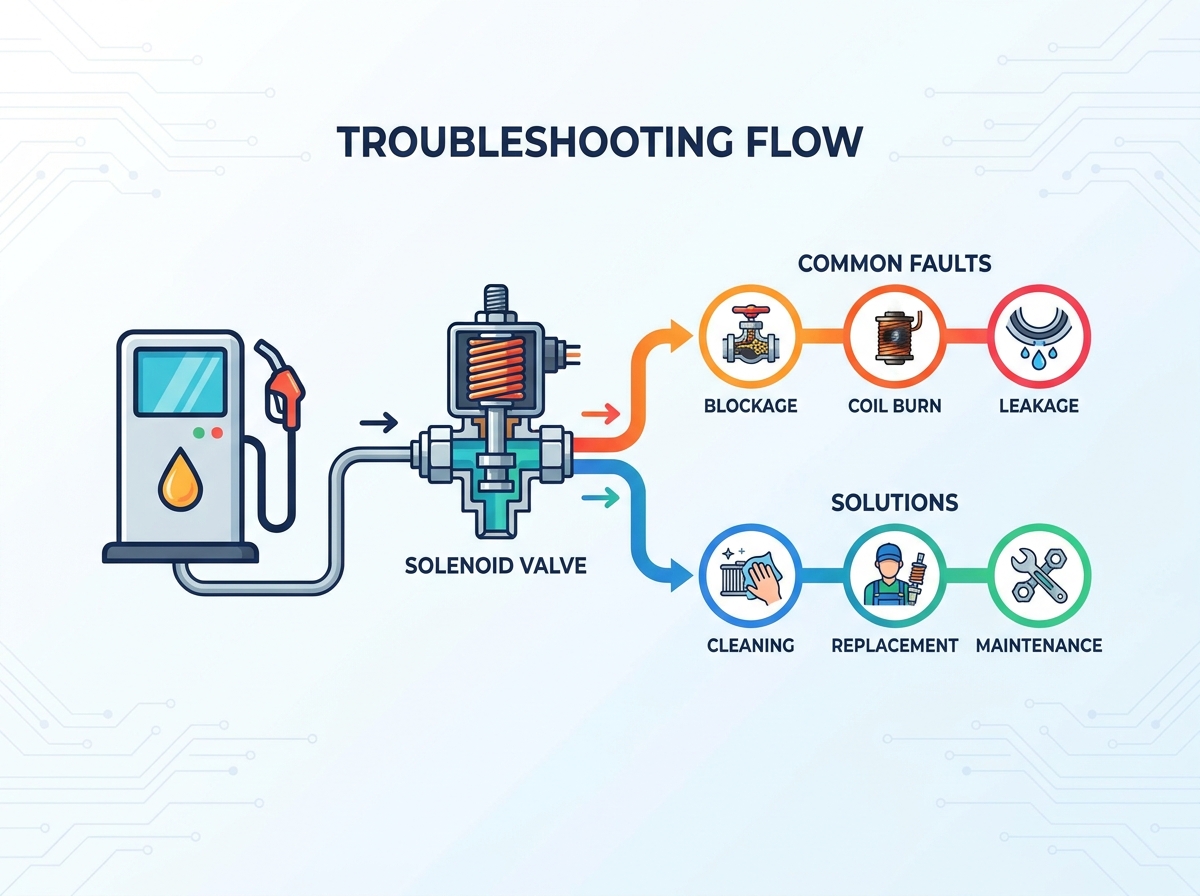
Diving into the root causes behind these frustrating symptoms allows maintenance teams to work smarter. You can implement sharper diagnostic routines and upgrade your hardware choices.
Looking at recent industry developments, fueling infrastructure is undergoing a massive transformation. Environmental regulations are tightening globally. The adoption of aggressive alternative fuels like E15, E85, and advanced biodiesels is skyrocketing. Legacy brass bodies and standard nitrile rubber components are failing at unprecedented rates under these harsh chemical loads.
In response, the industry is rapidly pivoting. Forward-thinking facility managers now demand highly resistant fluoroelastomers like Viton for all internal seals. Moreover, there is a clear shift toward predictive maintenance. Modern fueling networks are beginning to integrate IoT-enabled diagnostic sensors directly into dispenser mainboards. These smart systems detect minute voltage anomalies or pressure drops in the solenoid circuit. They alert operators to impending coil burnouts long before a catastrophic failure disrupts the station. Mastering traditional troubleshooting remains essential, but adapting to these smart diagnostic environments is the undeniable future of fueling maintenance.
The electromagnetic coil remains the most vulnerable electrical component within the assembly. Power surges rolling in from unstable local grids frequently trigger coil burnout. In addition, if dirt jams the mechanical plunger, the coil draws a massive continuous inrush of current. It desperately attempts to lift the stuck metal. This relentless draw eventually melts the delicate internal copper windings.
On the flip side, severe voltage drops can starve the coil. It fails to generate a magnetic field robust enough to overcome internal spring tension. The valve stubbornly refuses to open. Whether your site runs on AC220V, AC110V, DC24V, or DC12V, maintaining stable voltage is non-negotiable.
Underground storage tanks inherently accumulate a nasty sludge of water, rust flakes, and sediment. If primary inline filters are bypassed or physically damaged, these microscopic particulates travel like bullets directly into your fuel dispenser components. Even a solitary grain of sand can clog the microscopic pilot hole. This neutralizes the delicate pressure differential required to lift the main diaphragm. Sharp debris also scores smooth internal walls, leading to irreversible mechanical failure.
Solenoid valves are incredibly sensitive to the hydraulic pressure generated by the submersible turbine pump. If line pressure spikes excessively, the sheer downward force on the diaphragm becomes immense. The electromagnetic coil simply cannot lift it. Conversely, pilot-operated models require a specific minimum pressure differential to function properly. If system pressure drops too low due to a hidden line leak, the valve lacks the hydraulic assistance necessary to snap shut securely.
Constant cyclic operation takes a heavy toll on internal moving parts. Rubber diaphragms and plunger tips live in exceptionally harsh chemical environments. Meanwhile, stainless steel return springs experience metal fatigue after millions of rapid compression cycles. Eventually, they lose the crisp tension required to snap the valve shut instantly. This directly causes costly metering inaccuracies.
When a fault is detected, technicians must abandon guesswork. Follow a logical diagnostic framework to isolate the issue safely and accurately.
Before a single wrench is turned, strict safety protocols must be enforced. Technicians must completely sever the main electrical breaker supplying power to the specific dispenser. Once the electrical threat is neutralized, trapped internal hydraulic pressure must be relieved. Carefully bleed the line into an approved grounded container. Attempting to dismantle a valve body while the line remains pressurized is a recipe for disaster. You risk a hazardous high-pressure spray of highly flammable liquid straight into your face.
The most common fault to diagnose is a fried coil. Grab your standard digital multimeter and set it to measure resistance. Disconnect the coil from the mainboard wiring harness to isolate it. Next, place the multimeter probes firmly on the coil terminal leads.
Compare the resulting reading to the manufacturer baseline. If the screen displays infinite resistance, the internal wire has snapped. If it reads zero or near-zero, the internal insulation has melted into a solid short circuit. In either scenario, the coil is dead and must go.
If the electrical tests pass with flying colors, the ghost in the machine is almost certainly mechanical. Carefully unbolt the valve bonnet and gently remove the plunger tube assembly. Extract the internal plunger and inspect its surface for deep scoring or sticky varnish-like residue.
Next, pull out the main diaphragm and hold it up to a bright light source. Look closely for microscopic pinholes along the flex points. Inspect the primary valve seat for trapped debris like rogue pipe tape. Finally, use a flashlight to verify that the tiny pilot orifice is completely clear and unobstructed.
Once the troubleshooting process unmasks the root cause, applying the correct corrective measures restores full functionality and protects your bottom line.
If your teardown reveals sediment buildup, meticulous cleaning is required. Use non-corrosive approved solvents to gently dissolve stubborn sticky fuel residues. A quick blast of compressed air is perfect for clearing out the pilot orifice. However, never insert sharp metal needles into this tiny hole. Doing so permanently gouges the soft metal and utterly ruins the pressure calibration. Once the housing is pristine, discard all flattened O-rings. Install fresh chemically compatible seals to guarantee a leak-proof exterior.
When the multimeter confirms a dead coil, the fix is refreshingly straightforward. It rarely requires breaching the actual fluid plumbing. Simply remove the top retaining nut on the valve housing. Slide the burnt discolored coil off the armature stem and drop a brand-new unit into place.
Fasten the nut and reconnect the leads. It is absolutely critical to verify that the replacement coil perfectly matches the voltage and wattage ratings of the original. Installing an incompatible coil can instantly fry the expensive mainboard.
For valves suffering from internal wear but possessing a structurally sound metal body, a rebuild is the smartest financial move. Comprehensive repair kits typically bundle a fresh diaphragm, a new plunger, a crisp stainless steel spring, and a full set of O-rings. Swapping out these high-wear internals restores the valve to factory-new responsiveness. You entirely bypass the hefty expense of replacing the heavy casting.
Facility managers constantly juggle the decision of whether to patch an existing valve or allocate capital toward a brand-new assembly. Making the optimal choice hinges on the dispenser age, the specific nature of the breakdown, and explosion-proof safety requirements like Exd II BT4 standards.
| Scenario / Condition | Recommended Action | Cost Impact | Long-Term Reliability |
|---|---|---|---|
| Burnt coil, intact valve body | Replace Coil Only | Low | High (if voltage is stable) |
| Torn diaphragm, minor debris | Install Rebuild Kit | Medium | High |
| Cracked aluminum/brass housing | Full Replacement | High | Maximum |
| Frequent recurring leaks | Full Replacement | High | Maximum |
| Upgrading to E85/Biodiesel | Replace with Viton-sealed Valve | High | Essential for compliance |
Opting for a repair is highly recommended when the fault is isolated to a single easily accessible component. Dealing with a simple burnt coil or a minor sediment clog inside a relatively young dispenser makes a rebuild kit extremely cost-effective. Repairs make perfect sense as long as the core valve body shows zero signs of external corrosion and internal mounting threads remain sharp.
Full replacement graduates from an option to a necessity when structural integrity is compromised. If the brass housing exhibits hairline cracks or deep internal scoring that prevents sealing, a rebuild kit simply masks a fatal flaw. Furthermore, if a particular valve demands increasingly frequent repairs, it is a glaring indicator of systemic metal fatigue.
In these cases, investing in complete high-quality reliable fuel dispenser solenoid valves ensures long-term reliability. It eliminates severe safety risks and ultimately drives down the total cost of ownership. Ensure your new selection features proper explosion-proof certifications and robust fluororubber seals.
The absolute best troubleshooting strategy is preventing faults from ever occurring. Implementing a rigorous proactive maintenance schedule acts as an insurance policy for your critical hydraulic components.
The inline fuel dispenser filter serves as the primary bodyguard for the solenoid valve. If filters are neglected beyond their rated service life, they enter bypass mode. This catastrophic failure allows raw sediment and sludge to flow directly into the valve body. Facility managers must adhere strictly to a scheduled replacement program. Swap out 10-micron or 30-micron filters every few months or the moment flow rates begin to noticeably dip. Maintaining a pristine fuel stream is the single most effective tactic to shield delicate internal pilot orifices from premature death.
Because the valve is an electromechanical hybrid, its operating environment must remain stable. Technicians should routinely verify the voltage output from the mainboard to ensure it stays within safe parameters. Utilize industrial surge protectors to defend against erratic grid fluctuations. Additionally, conduct annual checks of the submersible pump line pressure. This ensures the hydraulic force is not quietly exceeding engineered tolerances. Maintaining this delicate balance keeps the system running smoothly for years.
A malfunctioning valve can quickly bottleneck your business operations, but it does not have to be a permanent crisis. Stay vigilant for early warning signs like jumping numbers, sluggish flow, or external leaks. Execute a logical step-by-step troubleshooting process to resolve most issues with minimal downtime.
Whether you opt for a quick coil swap, a comprehensive internal rebuild, or a complete replacement depends heavily on the severity of the wear. Always prioritize safety above all else during any maintenance task. To ensure your station operates at peak efficiency with zero compromises on safety, we invite you to explore top-tier fuel dispenser replacement parts. Equip your facility with components designed to withstand the harshest fueling environments, ensuring your pumps keep flowing and your revenue keeps growing.
The lifespan heavily depends on daily transaction volume and the overall quality of the fuel being pumped. However, with consistent preventative maintenance and regular filter changes, a high-quality valve typically delivers reliable service for 3 to 5 years before requiring a comprehensive rebuild or complete replacement.
Absolutely. If the internal plunger or diaphragm fails to close completely due to trapped debris or degraded rubber, highly pressurized fuel slowly seeps through the valve block. This phantom flow turns the sensitive meter, causing the display numbers to increment upward even when the nozzle is firmly shut.
The most definitive method is performing a resistance test using a digital multimeter. Disconnect the coil and measure the Ohms across its terminals. If the meter displays infinite resistance, you have a broken internal wire. If it shows zero resistance, the windings have melted and shorted out. Both results mean the coil is permanently dead and requires immediate replacement.
Sluggish flow usually indicates a failure in the primary fast-flow stage of the dual-stage solenoid valve. This can be caused by a burnt-out primary coil, a ruptured main diaphragm, or a clogged pilot orifice. It can also result from abnormally low system pressure from a failing submersible pump, which forces the dispenser to rely entirely on the slow-flow bypass.
Yes, if the issue is strictly related to debris or varnish buildup, cleaning is highly effective. You can dismantle the valve, use non-corrosive solvents to clean the internal brass walls, and use compressed air to clear the pilot orifice. Just be sure to replace the O-rings before reassembly to prevent external leaks.


