

Views: 0 Author: Site Editor Publish Time: 2026-07-15 Origin: Site


Specifying machinery for volatile environments presents a high-stakes reality for engineers. We must prioritize uncompromising safety, strict regulatory compliance, and seamless operational continuity. A single spark in a combustible atmosphere can lead to catastrophic consequences. Industrial setups often operate where three-phase power remains unavailable or economically unviable. These isolated agricultural silos and remote oil pump jacks necessitate a highly reliable single-phase solution. You face the unique challenge of delivering sufficient torque without triggering ignition risks.
This guide provides a strictly technical and commercial evaluation framework for selecting compliant equipment. We will explore how to minimize procurement risks and ensure long-term facility safety. You will learn actionable strategies for matching site-specific hazards to exact equipment specifications.
Single-phase explosion-proof motors require distinct thermal management considerations compared to three-phase alternatives due to lower starting torque and higher operating temperatures.
Verification of exact Class, Division, and Group ratings based on site-specific atmospheric hazards is non-negotiable for NEC/IEC compliance.
Sourcing a 220V hazardous motor often requires balancing off-the-shelf NEMA/IEC specifications with OEM customization capabilities for exact retrofits.
Engineers frequently encounter severe infrastructure limitations in the field. Remote or legacy facilities face significant power delivery constraints. Agricultural silos often lack robust electrical grids. Localized pumping stations experience similar operational deficits. Installing new three-phase power infrastructure becomes highly cost-prohibitive. You cannot easily justify pulling miles of new utility lines across rough terrain. This financial reality mandates a completely different engineering approach. Facility managers must deploy capable single-phase machinery instead.
A successful deployment must meet strictly defined performance criteria. It must deliver necessary starting torque instantly. It must also respect the thermal limits of the environment. We call these thermal limits T-Codes. The surrounding explosive atmosphere dictates these strict boundaries. Equipment must never exceed the auto-ignition temperature of ambient gases. You must balance mechanical output against thermal safety thresholds continually.
We must transparently analyze the engineering trade-offs. Three-phase systems offer natural advantages in industrial settings. They provide smoother starting torque and run cooler. Single-phase units require specialized internal switching mechanisms. Centrifugal switches help engage the starting capacitors during power-up. These mechanical switches create internal electrical arcs during normal operation. Manufacturers must strictly contain these inevitable arcs. The flameproof enclosure acts as your primary safety barrier. It prevents internal sparks from igniting external hazardous materials.
Selecting an explosion proof motor demands rigorous hazard mapping. You must understand environmental classifications thoroughly before proceeding.
The Class and Division system categorizes environmental threats accurately. Class I environments contain volatile vapors and flammable gases. Oil refineries typically fall into this stringent category. Class II environments involve highly combustible dusts. Grain processing facilities face these specific explosion risks. You must match the equipment to the exact designated zone.
Temperature Codes dictate operational safety across all classifications. T-Codes define the maximum allowable surface temperatures. Every hazardous gas has a specific, documented auto-ignition point. The equipment's exterior must remain well below this critical threshold. A mismatch here guarantees catastrophic facility failure.
Classification | Hazard Type | Typical Facilities | Primary Safety Focus |
|---|---|---|---|
Class I, Div 1 | Flammable Gases | Chemical plants, oil rigs | Arc containment, tight flame paths |
Class II, Div 1 | Combustible Dusts | Grain silos, coal handling | Dust exclusion, surface temperature |
Class III | Ignitable Fibers | Textile mills, woodworking | Preventing fiber accumulation |
Voltage integration requires careful, detailed evaluation. You might specify a 220V hazardous motor for isolated field applications. These specific units must deliver consistent torque under load. Long cable runs often cause significant voltage drops. Engineers must calculate these specific drops accurately. Proper wire sizing ensures reliable field operation.
Frame and mounting specifications dictate your installation success. Validating standard NEMA dimensions simplifies facility upgrades. A standard 56-Frame allows for quick direct drop-in replacement. IEC standard dimensions serve similar purposes in global markets. Rigid mounting remains absolutely essential. It helps the unit withstand continuous operational vibration safely.
Starting mechanisms demand intense technical scrutiny. Capacitor-start and capacitor-run configurations provide necessary breakaway torque. They operate entirely inside sealed, heavy-duty housings. You must assess the long-term reliability of these hidden components. Failure of a centrifugal switch leaves the start winding engaged. This quickly leads to dangerous internal overheating.
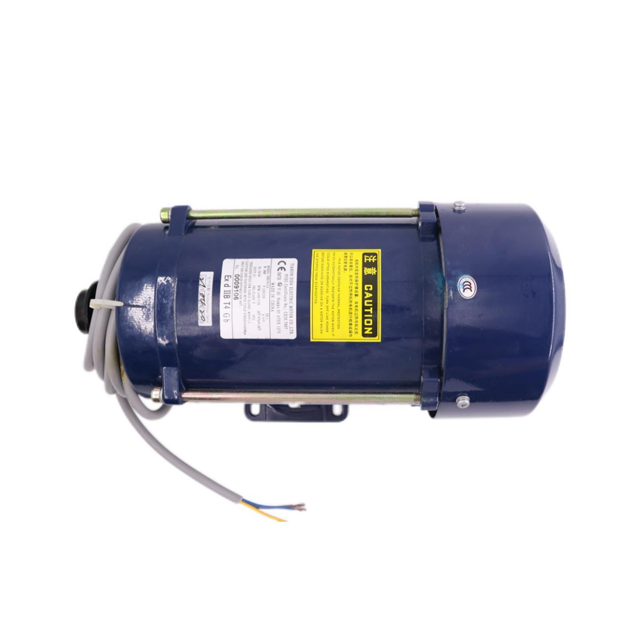
Buyers often rely exclusively on standard commercial catalogs. This approach frequently fails in niche industrial applications. Standard commercial designs lack specific mechanical adaptations. They might possess incompatible shaft dimensions for legacy pumps. They often struggle against aggressive ambient chemicals present on site.
You should evaluate vendor engineering support rigorously. Custom flange requirements often arise during complex retrofits. Specialized protective coatings prevent rapid chemical corrosion. Specific IP ratings matter immensely in outdoor applications. Upgrading from IP55 to IP66 blocks moisture effectively. It prevents internal condensation from damaging electrical windings.
Adaptable manufacturers provide tremendous value to procurement teams. You might consider specifying a Chida motor for distinct machinery. Engineering agility solves complex integration problems quickly. Vendors must supply verifiable testing data upon request. Custom OEM explosion proof configurations often outperform generic alternatives. They fit exact industrial requirements perfectly without dangerous field modifications.
Safety depends completely on verifiable testing proof. The manufacturer must provide traceable laboratory documentation. Look for valid UL, CSA, or ATEX certificates. Avoid vendors relying on vague self-certification claims. Hazardous sites demand independent laboratory validation. Procurement teams must request these documents before issuing purchase orders.
Field deployment introduces entirely new operational challenges. You must manage localized thermal risks actively.
Internal components generate substantial heat during startup sequences. Single-phase units run hotter generally than three-phase equivalents. Thermal overload protection prevents catastrophic equipment overheating. You can choose automatic or manual reset options. Manual resets force operators to inspect the equipment visually. This prevents continuous cycling under dangerous fault conditions.
Confined spaces complicate installation procedures significantly. Managing the physical bulk requires advanced logistical planning. A single phase explosion proof motor weighs significantly more. Thicker cast-iron enclosures safely contain internal blasts. Heavy-duty aluminum serves similar purposes in specialized designs. These dense materials increase the overall installation footprint. Rigging and mounting require specialized lifting gear.
Routine maintenance ensures ongoing regulatory compliance. Field modifications strictly void established safety ratings. Never drill into a certified flameproof enclosure.
Follow these essential maintenance steps carefully:
Inspect all machined flame paths for physical damage.
Clean exterior cooling fins regularly to maintain thermal dissipation.
Verify bearing lubrication intervals per manufacturer guidelines strictly.
Test the integrity of the terminal box seals annually.
Check external grounding connections for signs of corrosion.
Common Mistakes to Avoid:
Applying unauthorized sealants or RTV to machined flange joints.
Replacing lost factory bolts using standard commercial hardware.
Ignoring abnormal vibration during initial startup phases.
Painting over the manufacturer nameplate and certification data.
Procurement teams need a highly structured selection logic. Focus heavily on tangible engineering outcomes.
Prioritize feature-to-outcome mapping during vendor evaluation. Superficial design features do not improve facility safety. Robust ingress protection extends operational life in wet environments. Reliable centrifugal switches prevent premature electrical failure. Exact T-Code compliance ensures facility safety under heavy loads. Evaluate all vendors based on these critical metrics.
Supply chain reliability directly impacts project timelines. Evaluate the vendor's physical delivery capabilities. Hazardous duty equipment inherently requires longer manufacturing cycles. Specialized single-phase units rarely sit on distribution shelves. Plan your procurement schedule accordingly. Communicate expected lead times to installation crews early.
Comprehensive warranties provide necessary operational protection. Look for post-sale support covering rigorous environments. The warranty should acknowledge the harsh operating conditions explicitly. Good vendors stand firmly behind their engineering. They offer dedicated technical troubleshooting when field issues arise.
Specifying hazardous duty equipment remains a critical risk-management decision. You must align site hazard definitions perfectly. Compare them meticulously against the verified nameplate data. Precision ensures long-term operational safety across the facility.
Technical buyers should audit their specific site requirements. Verify your available voltage constraints first. Confirm your exact physical mounting dimensions next. Complete these crucial steps before engaging any prospective vendors. This deliberate preparation prevents costly procurement errors down the line.
Consult with specialized OEM engineers today. Map out your exact regulatory compliance standards. Define your specific mechanical performance needs clearly. Professional engineering guidance guarantees a safe, fully compliant installation.
A: Explosion-proof enclosures contain internal explosions safely. They cool escaping gases before they reach the outside atmosphere. Standard enclosed motors cannot withstand internal blasts. They merely prevent dust and water ingress. Standard enclosures will easily rupture if combustible gases ignite inside.
A: Most single-phase units are not VFD-compatible. They rely heavily on internal starting capacitors and centrifugal switches. VFDs interfere disruptively with these mechanical switching mechanisms. If you require speed control, consider converting to three-phase power locally.
A: Always check the physical nameplate first. Look for specific agency marks like UL, ATEX, or IECEx. Do not rely on marketing brochures alone. Request the corresponding laboratory certificates directly from the manufacturer. Verify the certificate numbers against the agency's database.
A: Safety standards dictate highly robust construction. Manufacturers must use significantly thicker casing materials. Cast iron and heavy-duty aluminum are standard industry choices. These dense materials withstand internal explosive pressures easily. A standard thin-walled enclosure would rupture.


