

Views: 0 Author: Site Editor Publish Time: 2026-07-10 Origin: Site


Upgrading or expanding forecourt infrastructure requires balancing peak-hour throughput against strictly limited physical space. Every square meter on your site matters. For site operators and fleet managers, selecting the right equipment directly impacts daily vehicle processing speed. It also dictates maintenance overhead and overall site profitability. If you choose poorly, lanes clog and profits drop. Drivers will simply drive to a competitor.
This guide analyzes the operational realities of multi-hose dispenser configurations. We explore internal mechanical designs, peak flow capacities, and physical footprints. We provide a strict, actionable evaluation framework for your procurement process. You will learn how to assess hardware options and ensure complex regulatory compliance. We also outline proven methods to mitigate deployment risks during forecourt upgrades. By understanding these technical variables, you can optimize your fueling islands. You will keep cars moving seamlessly and maintain high operating margins.
Multi-hose configurations (e.g., 2-hose, 4-hose, 6-hose) maximize grade availability per island but require higher maintenance budgets for hoses, nozzles, and retractors compared to single-hose blenders.
Evaluating a multi-hose petrol dispenser requires looking beyond upfront cost to calculate long-term operational factors, including flow rates, parts availability, and vapor recovery compliance.
Partnering directly with an OEM petrol dispenser manufacturer often yields better lifecycle support and customization for specialized commercial applications.
Standardized site preparation and strict adherence to safety compliance (ATEX/UL/OIML) during installation are non-negotiable for minimizing downtime.
Fleet managers observe severe bottlenecks during morning rushes. Cars queue up waiting for premium fuel grades. Physical island constraints prevent adding more concrete lanes. You must maximize output per existing square foot. The debate between single-hose blenders and multi-hose units centers exactly here.
These units use internal proportional blending valves. They combine base fuel grades inside the machine. They deliver multiple fuel types through one single nozzle.
Pros: Fewer exterior components mean lower visual hardware maintenance. The unit looks much cleaner to drivers. Customers rarely confuse nozzles.
Cons: Residual fuel remains inside the black rubber hose. This creates unwanted cross-contamination risks. A premium fuel buyer might get a liter of standard regular fuel first. Furthermore, single hoses create a dangerous single point of failure. If one vehicle damages the nozzle, the entire fueling position goes down. You lose that lane completely.
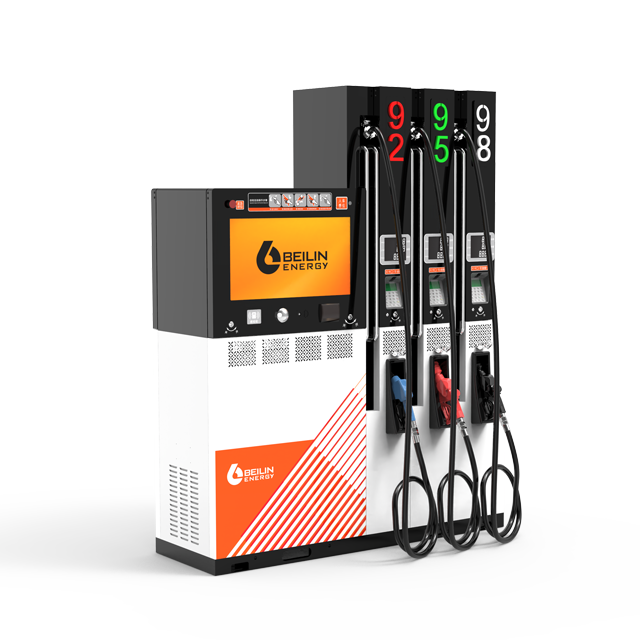
These feature dedicated internal plumbing, individual meters, and separate hoses for each fuel grade. Selecting a robust petrol station dispenser involves mapping these specific operational realities against your daily traffic.
Pros: Zero cross-contamination occurs here. Each grade flows through its own dedicated path. Redundancy acts as a massive benefit. If one nozzle fails, the remaining grades stay completely operational. You also enable faster concurrent fueling for split islands.
Cons: You face a higher initial capital expenditure. The unit requires significantly more internal parts. Exterior visual clutter increases noticeably. More hanging hoses mean more physical wear-and-tear points. Operators must budget for frequent hose inspections.
Matching pump capacity to your specific application remains crucial. Standard retail environments typically require 40 to 50 liters per minute. This flow rate suits passenger vehicles perfectly. However, heavy goods vehicles need much more power. A robust commercial fuel pump often pushes 70 to 130 liters per minute. If you install a low-flow unit in a dedicated truck lane, queue times will skyrocket. Drivers become frustrated.
Meter precision dictates your exact profit margins. Positive displacement meters remain the global industry standard. They measure fluid by trapping a fixed volume repeatedly. They prove reliable and relatively cheap to maintain. Conversely, advanced Coriolis mass flow meters measure the actual mass of the fuel. They account for ambient temperature fluctuations automatically. Coriolis meters offer superior long-term calibration stability. They prevent microscopic product loss over millions of pumped liters. We highly recommend them for high-volume sites.
Feature | Positive Displacement Meters | Coriolis Mass Flow Meters |
|---|---|---|
Measurement Method | Traps fixed liquid volumes | Measures exact fluid mass |
Temperature Variance | Requires external compensators | Automatically adjusts internally |
Maintenance Cost | Low to moderate | Higher initial replacement cost |
Best Application | Standard retail forecourts | High-volume commercial sites |
You must evaluate external hose management systems carefully. Ground dragging ruins expensive hoses quickly. It also creates dangerous trip hazards for walking customers. High-hanging setups keep hoses elevated cleanly. Spring-loaded retractor mechanisms offer an even better customer experience. They pull the heavy hose back smoothly after use. This prevents accidental drive-over damage.
A shiny new pump proves useless if it cannot talk to your till. Ensure seamless backward compatibility regarding your existing forecourt controllers. Common global communication protocols include IFSF, Gilbarco 2-Wire, and Tokheim. You also need highly secure payment terminal integration. EMV and strict PCI compliance are globally mandatory. Skimming devices pose constant threats. Modern dispensers must feature encrypted keypads and tamper-proof doors.
You cannot ignore strict regional approvals. North American markets demand UL or cUL certifications. European operators must strictly adhere to ATEX and MID directives. For global metrology standards, OIML certification guarantees baseline accuracy. These rigorous stamps prove the unit will not ignite hazardous site vapors. Inspectors check these labels during annual audits.
Environmental regulations grow stricter every single year. Stage II active vapor recovery is often legally required locally. These internal systems pull harmful vapors out of the vehicle tank during fueling. They route those captured vapors back into your underground storage tank safely. Evaluating the sheer efficiency of these internal vacuum pumps is vital. A multi-hose unit must handle active vapor recovery across all nozzles simultaneously. Properly functioning systems reduce local air pollution significantly. They also prevent strong fuel smells on the forecourt.
Catastrophic spills destroy profitable businesses overnight. Mandatory safety components prevent these massive disasters. Shear valves, frequently called crash valves, sit safely at the base of the unit. If a car hits the pump, these valves snap shut immediately. They seal the pressurized underground fuel lines securely. Inline breakaway couplings protect the main unit during accidental drive-offs. They snap cleanly under tension, sealing both exposed hose ends. Emergency stop integrations allow store cashiers to cut power instantly. These components are standard for modern service station equipment setups. We never recommend bypassing them.
Buying directly from the factory offers very clear operational benefits. You gain immediate access to critical firmware updates. You always receive certified original replacement parts. Factory-level technical support resolves obscure digital communication errors quickly. Furthermore, OEMs allow deep site-specific customization. You can order unique internal hydraulic layouts directly from the factory assembly line. You can request custom exterior branding configurations easily.
Third-party resellers also serve a highly distinct purpose. They are highly useful for complex multi-brand forecourts. If you run different pump brands, a reseller provides one single point of contact. However, you must perform a strict vendor risk check. Always verify their official factory authorization level first. Check their local warehouse parts inventory personally. Demand a tightly guaranteed Service Level Agreement (SLA) for emergency technician dispatch times.
Do not accept basic standard warranties blindly. Typical agreements only cover 12 to 24 months. Deconstruct the dense fine print carefully. Does the contract cover travel labor or just physical parts? Explore extended lifecycle service agreements proactively. These robust contracts often shift the daily maintenance burden entirely to the provider. They ensure predictable annual maintenance spending.
Never schedule a massive delivery without verifying concrete site readiness. Assess your deep underground pipework thoroughly. Check all double-walled sump containment vessels for hidden leaks. Verify underground electrical conduit pathways. Your high-voltage power and low-voltage data lines must remain physically separated. Interference causes random pump offline errors.
Upgrades halt daily fuel sales abruptly. You must mitigate this heavy financial loss. You must use carefully phased installation strategies. Upgrade your busy forecourt island-by-island slowly. Keep the rest of the retail site fully operational. Route customer traffic carefully around the active construction zones using clear signage.
Do not skip mandatory steps during the final software boot-up. Follow a strict Standard Operating Procedure always.
System purging: Push all trapped air out of the new hydraulic lines safely.
Flow rate calibration testing: Dispense exactly 20 liters into a certified proving can manually. Adjust the electronic meter accordingly.
Vapor recovery testing: Verify the internal vacuum pressure meets local strict environmental standards.
POS communication verification: Run multiple dummy transactions using all accepted credit card types. Ensure the till records the exact dispensed volume accurately.
These steps guarantee a flawless and highly profitable opening day.
Procuring the right configuration remains a highly strategic operational decision. You must balance daily fueling efficiency against long-term mechanical maintenance realities. Single-hose blenders look visually clean but present distinct cross-contamination risks. Multi-hose units offer unmatched lane redundancy and concurrent processing speed. Base your final hardware choice on documented site traffic patterns. Analyze your specific grade demand thoroughly before ordering. Always verify the local service footprint of your chosen equipment manufacturer. Do they stock parts nearby? Can they dispatch technicians quickly?
Finally, request a comprehensive technical site audit. Review specific hardware spec sheets closely. Map these mechanical capabilities against your strict throughput goals. We highly recommend standardizing your forecourt hardware. This approach simplifies employee training immensely. It also streamlines your annual safety compliance audits. Take these proactive steps today. You will build a faster, safer, and highly profitable fueling environment.
A: A single-hose model blends fuels internally. It dispenses them through one nozzle. This reduces exterior hardware clutter. However, a multi-hose model uses dedicated internal plumbing. It features external hoses for each specific fuel grade. This completely eliminates residual fuel mixing. Multi-hose setups ensure premium buyers never receive regular fuel remnants.
A: Internal hydraulics require strict annual calibration. Technicians must also change internal filters yearly. External components demand more frequent attention. You must conduct weekly visual inspections on hoses, breakaways, and nozzles. High-volume sites typically replace these exterior wear parts every 12 to 24 months. Timely replacement prevents catastrophic leaks.
A: Yes, custom configurations easily handle this mixed demand. Manufacturers can install high-flow nozzles on one side. These push up to 130 liters per minute for heavy diesel trucks. They place standard flow nozzles on the opposite side for passenger petrol vehicles. This optimizes mixed-use traffic lanes perfectly.
A: Stage II systems capture harmful Volatile Organic Compounds (VOCs). Cars expel these gases from their tanks during routine refueling. The dispenser routes these vapors safely back into the underground storage tank. Most developed regulatory jurisdictions mandate this technology. It represents a strict environmental compliance requirement for modern sites.


