Views: 0 Author: Site Editor Publish Time: 2026-06-03 Origin: Site


Upgrading high-volume forecourts requires balancing hardware reliability with seamless transaction integration. The 6-hose configuration stands as a critical transition point for scaling station throughput. You need equipment capable of handling continuous traffic while maintaining absolute data accuracy. We provide an objective, evidence-based breakdown of the XF Series Fuel Dispenser. This guide evaluates its engineering baseline, environmental resilience, and long-term operational viability compared to standard commercial alternatives.
Procurement managers, forecourt operators, and fuel retail network directors will find this evaluation essential. It clarifies exactly how this multi-hose commercial dispenser performs under severe daily pressure. By exploring its dimensional footprint, robust pumping mechanisms, and safety-focused design, you will understand how to optimize your physical island layouts. You will also learn how to future-proof your site architecture against unpredictable power grids and extreme weather conditions.
High-Volume Throughput: Standardizes at 6 hoses with configurations supporting 4.5 to 45 L/min (up to 80L/min optional), optimizing lane efficiency.
Grid Resilience: Features battery-free 10-year data retention and strong electromagnetic anti-interference, mitigating risks in areas with unstable power infrastructure.
Compliance & Interoperability: Meets Sinopec design standards and supports extensive POS/FMS protocol integrations.
Future-Proofing: Integrates into broader site energy strategies, sitting alongside solutions like the KB Series Fuel Dispenser, XC Series Fuel Dispenser, and emerging DC EV Charging Station infrastructure.
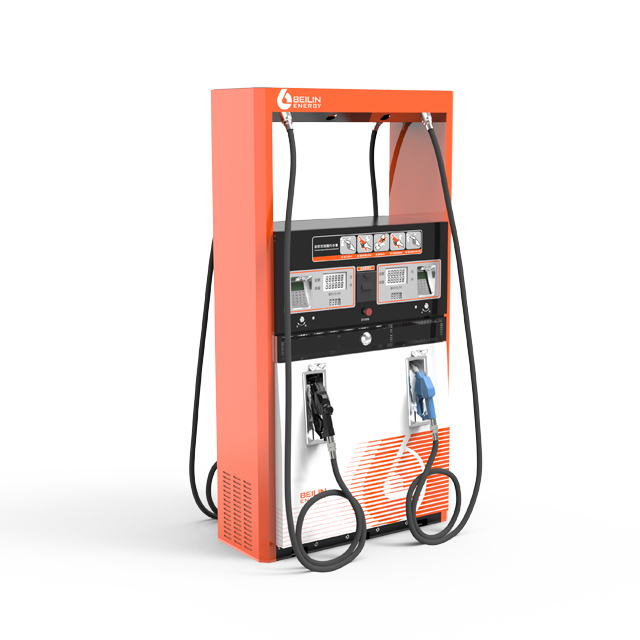
Evaluating commercial petroleum equipment begins with its physical and mechanical foundation. The XF Series Fuel Dispenser utilizes a highly optimized architectural footprint. Operators often struggle with narrow islands during peak hours. This unit addresses spatial planning directly through its standard 1250x630x2380mm chassis. This compact yet imposing footprint maximizes simultaneous fueling per physical island. The 6-hose portable display design serves multiple lanes effortlessly. It allows continuous vehicle rotation without causing forecourt bottlenecks.
Pumping mechanisms dictate operational efficiency. Standard configurations deliver steady flow rates between 4.5 and 45 L/min. They feature robust suction parameters capable of drawing fuel from underground tanks up to 6 meters deep. For commercial trucking lanes, heavy-duty options push output up to 80 L/min. This flexibility ensures you can service standard passenger vehicles and heavy goods transports using the same foundational hardware.
Technical Parameter | Standard Specification | Operational Benefit |
|---|---|---|
Dimensions | 1250 x 630 x 2380 mm | Optimizes physical island space for maximum vehicle flow. |
Flow Rate | 4.5 ~ 45 L/min (Standard) | Balances speed and safety for passenger vehicles. |
Metering Accuracy | ±0.25% | Prevents margin loss over millions of dispensed liters. |
Noise Emission | < 70dB(A) | Improves customer experience and operator comfort. |
Material durability directly impacts daily user experience (UX). The unit utilizes a heavy-gauge metal casing protected by a premium matte finish. This specific coating prevents UV yellowing and requires very low maintenance. Safety-focused UX design heavily influences the external architecture. Tilt-designed nozzles prevent hazardous splashback onto customers. Smooth, rounded cornering mitigates collision damage from careless drivers. These subtle engineering choices reduce station liability and keep equipment looking pristine over years of heavy use.
Forecourts often operate in regions facing severe infrastructure challenges. Power fluctuation defense represents a critical evaluation metric for modern dispensers. The proprietary motherboard design inside this series resists severe electrical grid interference. Traditional dispensers rely heavily on backup batteries to save transaction data during power cuts. Those batteries degrade quickly in extreme heat or cold. They become a hidden maintenance liability.
Engineers bypassed this vulnerability entirely. They implemented a battery-free data retention system. During a total power failure, the system retains all transaction and configuration data for up to 10 years. You do not lose shift tallies. You do not lose pricing configurations. This failsafe protects operator revenue and eliminates routine battery replacement schedules.
Extreme climate adaptability further separates industrial-grade equipment from budget alternatives. The internal components guarantee operational viability in brutal conditions. They function flawlessly in extreme temperatures ranging from -40ºC to +50ºC. They withstand environments experiencing up to 95% humidity without succumbing to internal condensation or circuit shorts.
Ingress protection plays a massive role in export markets. High-wind areas face constant sandstorms and heavy dust exposure. Standard equipment clogs rapidly under these conditions. The sealed casing and shielded ventilation paths block particulate intrusion. This rigorous environmental defense makes the unit highly desirable for remote installations and desert climates.
Procurement teams must distinguish between essential features and premium upgrades. The base model offers a robust out-of-the-box experience. It includes highly accurate flow meters, durable single-phase motors, and basic RS485 communication protocols. Washable filters reduce ongoing consumable costs. Emergency stop buttons ensure immediate hazard response. These standard features satisfy the core requirements of standard retail stations.
You can customize the equipment extensively by evaluating add-on modules. Transaction hardware upgrades transform a simple pump into a modern retail kiosk. IC/ID card modules enable self-service fleet fueling. Built-in receipt printers satisfy consumer demand for immediate documentation. Customizable LED and LCD screens turn dead space into active advertising zones, driving secondary in-store sales.
Safety and compliance expansions help operators navigate stringent regional regulations. Vapor recovery systems capture harmful emissions before they escape. Breakaway valves prevent catastrophic spills if a driver drives away while connected. Universal joints reduce hose wear and tear. You must weigh the initial cost of these modules against regulatory requirements and long-term risk reduction.
Expansion Category | Available Add-on Modules | Primary Application |
|---|---|---|
Transaction Hardware | IC/ID Readers, Receipt Printers, LED Screens | Self-service lanes, fleet management, retail advertising. |
Safety & Compliance | Vapor Recovery, Breakaway Valves, Universal Joints | Strict emission zones, high-traffic accident prevention. |
Communication | Advanced FMS Interoperability, Global POS Protocols | Networked stations requiring centralized data reporting. |
Global protocol matching ensures your hardware speaks to your software. The system offers seamless interoperability with standard POS extensions. It connects fluidly with global fleet management systems (FMS). This prevents hardware lock-in and allows IT directors to upgrade backend software without replacing physical forecourt assets.
Station architectures rarely remain static. Forecourt operators must plan for expansion and technological shifts. Cross-series equipment matching allows you to maintain brand consistency while addressing specific site constraints. You might deploy the multi-hose configuration in your highest volume lanes. For narrower islands or restricted spatial constraints, you can confidently integrate the KB Series Fuel Dispenser. It shares a similar technical pedigree but fits smaller physical footprints. If your site demands distinct aesthetic profiles or varied volume requirements, the XC Series Fuel Dispenser provides the necessary visual and mechanical versatility.
The multi-energy forecourt transition represents the largest shift in retail fueling. You cannot view petroleum equipment in isolation anymore. Frame your fuel dispensers as part of a comprehensive hybrid energy strategy. Smart site planning places traditional liquid fueling equipment alongside emerging infrastructure. You must capture both internal combustion engine (ICE) drivers and electric vehicle (EV) consumers.
Integrating a DC EV Charging Station adjacent to your traditional pumps maximizes land usage. These systems often share the same unified station management software. By standardizing your communication protocols, you can route transaction data from a diesel nozzle and a DC Charging Stack directly into a single backend dashboard. This cohesive scaling strategy simplifies reporting, reduces IT complexity, and prepares your forecourt for the next decade of consumer driving habits.
Selecting the right equipment requires rigorous vendor due diligence. Procurement managers face a market flooded with generic equipment. You must verify actual in-house manufacturing capabilities. Real manufacturers build their own pumps, meters, and electronic boards. Pure trading or assembly operations simply bolt together disparate parts. In-house manufacturing guarantees tighter quality control and reliable long-term support.
Supply chain and maintenance realities dictate operational uptime. Module interchangeability plays a massive role in streamlined operations. When you standardize on a single, well-engineered series, you drastically reduce your spare part inventory. Technicians learn one system architecture. They diagnose issues faster and swap parts interchangeably across multiple lanes.
When preparing your procurement next steps, utilize a structured approach. Random inquiries often yield mismatched equipment quotes. Follow this actionable checklist when submitting Requests for Quotations (RFQs):
Document specific flow rate requirements based on target vehicle types (passenger vs. commercial).
Provide localized climate constraints, noting extreme temperatures or high dust conditions.
List required compliance standards (e.g., OIML, ATEX, Sinopec design requirements).
Supply detailed POS API documentation to guarantee software compatibility.
Request confirmation of battery-free data retention mechanisms.
A structured RFQ ensures you receive accurate proposals. It forces vendors to address your specific environmental and technical challenges directly. You protect your network from deploying mismatched or technologically isolated hardware.
The 6-hose configuration delivers a highly balanced architecture. It combines rugged environmental defense with high-volume transaction capability. By utilizing battery-free data retention and strong electromagnetic shielding, it provides absolute reliability in challenging infrastructure environments. The spatial efficiency of its chassis guarantees optimal vehicle throughput.
For networked stations and regional conglomerates, this equipment represents the ideal operational standard. It prioritizes data safety, grid resilience, and regulatory compliance. It sits seamlessly within a multi-energy strategy, bridging the gap between traditional fueling and modern retail automation.
Procurement teams should act strategically. Do not settle for basic brochures. Request a custom specification sheet immediately. Map this advanced dispenser series directly against your existing POS infrastructure and upcoming site blueprints to secure your forecourt's future.
A: Industry best practice typically offers 12 months from the date of installation or 16 months from the Bill of Lading (whichever comes first). Reputable manufacturers back this mechanical warranty with lifetime remote technical support to ensure continuous station uptime.
A: Yes. Units utilizing standard RS485 ports and open communication protocols interface easily with major global retail management systems. You must specify your exact POS software during the RFQ phase to ensure perfect API compatibility.
A: High-end models utilize battery-free data retention mechanisms built directly into the motherboard. They safely store transaction records and pricing configurations for up to 10 years without power. This entirely eliminates the maintenance liability of replacing traditional backup batteries.
A: You must ensure the manufacturer holds verifiable ISO9001, OIML, and CE certifications. They should also meet domestic operational approvals like Sinopec structural standards. For hazardous environments, explosion-proof certifications such as CNEX or ATEX remain strictly mandatory.