Views: 0 Author: Site Editor Publish Time: 2026-06-02 Origin: Site


Commercial oil stations and truck stops face immediate operational friction every single day. Slow fueling times severely limit daily vehicle throughput. They create frustrating bottlenecks during peak hours. Heavy-duty fleets wait in long queues. Consequently, lane turnover drops and your site profitability suffers directly. Operators need a reliable evaluation framework to solve this throughput challenge. You must optimize operations without overhauling your entire site infrastructure. Upgrading your equipment requires balancing high-flow architecture, multi-protocol compatibility, and long-term return on investment.
In this comprehensive guide, we will analyze modern high-flow solutions tailored for commercial sites. You will learn how dual-hose configurations optimize dispensing speed. They maintain strict accuracy under heavy, sustained use. We will also explore integration pathways for legacy POS systems. Finally, you will discover future-proofing strategies for emerging alternative energy hubs.
Throughput Efficiency: High-flow capabilities significantly reduce queue times for heavy fleets, directly increasing station revenue capacity.
Universal Protocol Integration: Out-of-the-box compatibility with industry-standard POS protocols (Ifsf, Pts) and legacy hardware (Tokheim, Gilbarco).
Transparent Implementation: Clear breakdown of physical footprint, installation requirements, and vendor Service Level Agreements (SLAs).
Future-Ready Scalability: Modular pathways to upgrade site infrastructure, including integration with modern EV infrastructure.
Slow dispense rates create a massive financial impact. Standard dispensing equipment typically maxes out at 45 liters per minute. These standard rates work fine for consumer passenger cars. However, they create severe bottlenecks for heavy-duty fleets and commercial truck stops. A commercial truck often carries a 150-gallon (approx. 560 liters) fuel tank. Filling this tank at standard speeds keeps a single truck occupying a lane for nearly 15 minutes. This delay restricts the total number of vehicles you can service daily. It directly caps your revenue potential.
Upgrading to a high-flow system establishes a new operational benchmark. Modern high-flow solutions deliver volumes ranging from 100 L/min to an extreme 300 L/min. Upgrading reduces the time required to fill a 150-gallon tank by up to 80%. A driver can complete a fill-up in just two to three minutes. This rapid turnaround drastically optimizes lane turnover. Fast fueling keeps fleet managers happy. It encourages them to route their drivers to your specific stations.
We primarily see three target deployment environments for these upgrades. Highway gas stations benefit from clearing transient traffic quickly. Commercial fleet garages utilize them to fuel municipal buses or delivery trucks overnight. Remote mining and construction sites rely on them to refuel heavy earth-moving equipment. Each scenario demands rugged reliability alongside raw speed.
Throughput Comparison Chart: Standard vs. High-Flow Systems | |||
System Type | Flow Rate Capacity | Est. Time for 150-Gallon Fill | Primary Use Case |
|---|---|---|---|
Standard Retail Dispenser | 45 L/min | ~13-15 Minutes | Passenger vehicles, light trucks |
Entry High-Flow System | 100 L/min | ~6 Minutes | Small fleet garages, regional transport |
Ultra High-Flow System | Up to 300 L/min | ~2-3 Minutes | Mining equipment, heavy truck stops |
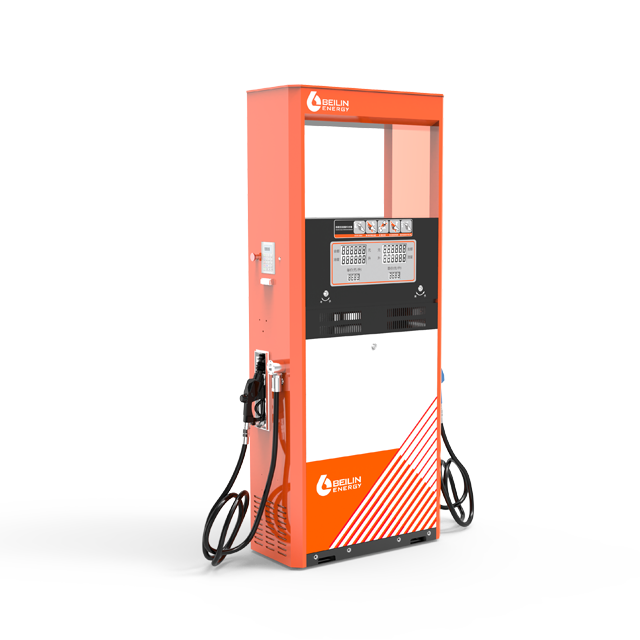
The core hardware dictates the reliability of any commercial fuel station. We must look closely at the internal architecture. A high-performance unit relies on a 2-hose, 2-pump, and 2-flow-meter configuration. This specific dual-hose design is critical. It supports simultaneous fueling on both sides of the island. Independent pumps ensure you maintain high volumes without experiencing pressure drops. Two trucks can fuel at maximum speed simultaneously. This design prevents the dreaded slowdown when a second driver activates the opposite nozzle.
Material selection determines equipment lifespan in harsh environments. Manufacturers utilize cold-rolled steel housing for maximum durability. They apply specialized anti-corrosion coatings to the exterior panels. The universal, modular design protects internal components from extreme weather. These robust systems operate flawlessly in temperatures ranging from -25°C to +55°C. You can deploy them in freezing northern climates or blistering desert environments. They resist environmental degradation effortlessly.
Precision matters just as much as speed. High-volume fluid transfer naturally creates turbulence and air bubbles. If left unchecked, air bubbles inflate volume readings. This causes inaccurate billing and customer disputes. The XC Series Fuel Dispenser mitigates this issue using a built-in air separator. This component continuously strips air from the fuel line before it reaches the meter. The advanced pump system works in tandem with this separator. Together, they maintain a strict accuracy rate of ±0.30% under sustained high-volume operation. You deliver exact fuel quantities every single time.
Operators frequently worry about legacy tech debt. They hesitate to upgrade mechanical hardware because they fear POS integration failures. Modern dispensing systems eliminate this risk entirely. They feature out-of-the-box compatibility with major flow meter systems like Bennett, Tokheim, and Tatsuno. They communicate seamlessly with standard oil station management systems. Built-in RS-485 communication protocols ensure rapid data transfer. You can connect new hardware to your existing POS network in hours, not days.
Fuel theft and internal shrinkage threaten station profitability. Advanced anti-fraud features lock down your inventory. These machines utilize strict data encryption protocols. Data flows securely between the dispenser and the back-office server. Tamper-proof metal keypads resist physical damage and unauthorized access attempts. Furthermore, remote fueling authorization features provide massive operational flexibility. Managers can approve transactions from a central dashboard. This capability allows for efficient unmanned or low-staff operations during night shifts.
Regulatory compliance remains non-negotiable for commercial deployment. BoFU (Bottom of Funnel) evaluations must prioritize safety certifications. You should always look for metrology certifications like OIML. This guarantees international measuring accuracy standards. CE marking ensures the equipment meets European safety, health, and environmental protection requirements. Most importantly, verify the ExdmbIIAT3 explosion-proof rating. This strict standard guarantees the electrical components will not ignite ambient hydrocarbon vapors. It protects your staff, your customers, and your facility.
Choosing the exact model requires mapping your specific site needs against the manufacturer's lineup. You must balance physical footprint, aesthetic requirements, and raw utility. A simple portfolio matrix helps buyers quickly narrow down their options.
First, evaluate the standard commercial offering. The XC Series represents the optimal balance of high-flow utility and cost-effectiveness. It fits perfectly into multi-lane commercial stations. It provides the rugged build required for continuous heavy-duty use. It handles maximum volume without unnecessary frills.
Next, consider environments demanding higher aesthetic appeal. The KB Series Fuel Dispenser serves a slightly different market segment. We define its ideal use case around premium aesthetic requirements. This series features refined exterior styling and specific localized form factors. It works beautifully for urban retail sites where visual branding heavily influences consumer choice.
Finally, look at specialized spatial constraints. The XF Series Fuel Dispenser offers a highly targeted application. We outline its best use for sites with strict compact footprint requirements. It delivers excellent performance for space-constrained industrial sites. Agricultural depots and small marinas often deploy this series to maximize limited dock or yard space.
Portfolio Configuration Matrix | |||
Series Model | Primary Application | Key Strength | Footprint Requirement |
|---|---|---|---|
XC Series | Commercial / High-Traffic Lanes | Optimal utility & robust durability | Standard multi-lane island |
KB Series | Premium Urban Retail | Enhanced aesthetic & branding appeal | Standard retail island |
XF Series | Industrial / Agricultural | Compact integration & flexibility | Space-constrained areas |
The modern oil station continues to evolve rapidly. We acknowledge the hybrid site reality facing station operators today. Retail fuel locations are transforming into comprehensive energy hubs. You cannot plan a site upgrade without considering the impending shift toward electrification. Your infrastructure planning must address both present hydrocarbon demands and future battery technologies.
Running high-flow diesel lines alongside new electrical infrastructure requires meticulous spatial planning. You must carefully map power-routing considerations. A modern DC EV Charging Station demands significant grid capacity and heavy underground cabling. You should trench and lay conduits for future electrical expansion while excavating for new fuel lines. Doing this simultaneously minimizes site downtime. It prevents you from tearing up fresh concrete two years later.
Unified management systems tie these divergent technologies together. You gain immense operational benefits by integrating legacy dispensing protocols with modern networks. Connecting a new DC Charging Stack into your existing POS allows for centralized billing. Your cashiers manage diesel transactions and EV charging sessions from a single interface. Consolidated reporting simplifies accounting. It provides a crystal-clear view of your site's total energy revenue.
Buyers often overestimate the friction of deploying new heavy equipment. Understanding out-of-the-box expectations eases logistics planning. A standard dual-hose unit ships with predictable packaging metrics. You can expect a gross weight of approximately 300kg per unit. They fit easily into standard container dimensions (roughly 900x440x2200mm). This standardized sizing simplifies forklift handling and reduces international shipping variables.
We provide a clear installation roadmap to lower perceived implementation friction. Site teams can generally complete the physical deployment quickly if they follow sequential steps.
Site Preparation: Verify the concrete island dimensions and ensure the anchor bolt patterns match the provided structural blueprints.
Physical Anchoring: Hoist the unit into place and secure it firmly to the concrete island using heavy-duty industrial anchors.
Piping Connections: Connect the underground supply lines to the internal pump inlets. Ensure all mechanical joints are sealed and pressure-tested for zero leakage.
POS Wiring: Route the RS-485 communication cables and primary power lines through the explosion-proof conduit directly to the main terminal board.
Flow Calibration: Conduct the initial fluid run. Use certified proving cans to verify the air separator efficiency and calibrate the meter to the exact ±0.30% standard.
Trustworthy vendors provide complete Service Level Agreement (SLA) visibility. You should demand a transparent vendor lifecycle. This ensures you never face technical challenges alone.
Pre-sale Phase: The vendor provides detailed site planning support. They share structural blueprints and confirm specific POS protocol matching before you ever sign a contract.
On-purchase Phase: You receive proactive production tracking updates. The manufacturer supplies pre-shipment photo and video verification. You see your exact equipment running before it enters the shipping container.
After-sale Phase: True partners offer robust remote troubleshooting. They provide digital manuals and parts warranties. Video support allows factory engineers to guide your local technicians through rapid, tool-free modular part replacements.
Upgrading your commercial fuel station demands practical, reliable solutions. The XC Series represents a low-risk, high-reward upgrade for high-traffic environments. It delivers raw dispensing speed to eliminate bottlenecks. It features rugged cold-rolled steel construction to survive extreme climates. It integrates flawlessly with your existing legacy POS infrastructure. Ultimately, it empowers your site to service more heavy-duty fleets daily, directly increasing your revenue capacity.
Take proactive steps to modernize your lanes today. We recommend auditing your current peak-hour queue times to identify your worst bottlenecks. Next, request a customized configuration matrix from your manufacturer. Finally, schedule a technical protocol-matching consultation to ensure seamless integration with your back-office systems. Do not let outdated equipment cap your site's profitability.
A: Yes. The system features universal protocol integration. It includes native RS-485 communication support. It provides out-of-the-box backward compatibility with major industry protocols like Ifsf and Pts. It easily connects with legacy hardware frameworks from brands like Tokheim, Bennett, and Gilbarco without requiring expensive middleware.
A: Yes. Factory-direct manufacturing allows for deep OEM/ODM customization. You can dictate specific external color schemes, branding decals, and localized form factors. We also configure the internal pumps and meters to meet your exact required flow rates, ranging from 100 L/min up to 300 L/min.
A: We utilize a comprehensive remote diagnostic process. Factory engineers support your local technicians via live video and detailed photo sharing. Furthermore, we designed the equipment with a modular architecture. This allows for tool-free or extremely low-friction replacement of primary components. We ship replacement parts directly to your site.
A: Standard maintenance is minimal but crucial. You should inspect the air separator valves and clean the internal pump filters every six months. Annual calibration using a certified proving can ensures the flow meter maintains its strict ±0.30% accuracy. The modular design makes accessing these components fast and straightforward.