

Views: 0 Author: Site Editor Publish Time: 2026-06-05 Origin: Site


Transitioning from traditional standalone chargers to mega-watt level charging infrastructure requires a fundamental shift in capital expenditure logic. For high-traffic transit hubs, standalone units routinely result in stranded power. They restrict energy distribution and ultimately lower your return on investment. The split-type architecture changes this physical and financial dynamic entirely. By utilizing centralized power cabinets and distributed satellite terminals, group control solves these rigid inefficiencies. It routes available power exactly where vehicles need it most.
This guide provides a comprehensive, vendor-neutral evaluation framework. We designed it for procurement teams, Charge Point Operators (CPOs), and fleet managers. You will learn how to properly shortlist 360kW to 800kW systems. We evaluate core hardware scalability, navigate complex grid constraints, and secure long-term operational viability. By understanding matrix switching algorithms and modular power scaling, you can build a robust site. Your infrastructure will easily support the next generation of high-demand electric vehicles.
Dynamic Power Allocation: Centralized group control improves daily site turnaround by up to 20% by redirecting unused power from full batteries to newly arrived vehicles.
Modular CAPEX: Start with a 360kW base and scale up to 800kW+ through modular power blocks without replacing the core infrastructure.
Grid Optimization: Advanced load balancing and storage integration prevent the need for immediate, high-cost utility substation upgrades.
Legacy Infrastructure Transition: Satellite EV terminals mimic traditional fueling layouts, allowing seamless co-location with or replacement of legacy petrol equipment.
Operators must understand the deep physical and financial differences between standalone and split-type architectures. Standalone units permanently lock power capacity to specific parking bays. If you install a 150kW charger, you reserve 150kW exclusively for that single location. Conversely, a split-type DC EV Charging Station pools massive amounts of power in a remote central cabinet. It then distributes this energy using sophisticated matrix switching algorithms. Multiple lightweight satellite dispensers receive exact currents based on real-time vehicle requests.
This intelligent routing completely eliminates the problem of stranded power. Consider a scenario where a vehicle requests only 50kW on a fixed 150kW standalone charger. You instantly waste 100kW of expensive capacity. Group control technology reallocates that stranded 100kW to neighboring vehicles in milliseconds. You maximize your installed grid capacity and serve more customers concurrently.
Furthermore, satellite dispensers boast a significantly smaller physical footprint. You maximize revenue-generating parking spaces directly at the storefront. Operators move the heavy, noisy, and visually intrusive power cabinets to the site perimeter. This improves traffic flow and enhances overall customer safety.
Feature | Standalone Chargers | Split-Type Group Control |
|---|---|---|
Power Distribution | Fixed per bay (e.g., 150kW max) | Dynamically shared (e.g., up to 800kW pooled) |
Stranded Power | High (Unused kW cannot be shared) | Zero (Unused kW redirects instantly) |
Terminal Footprint | Large and bulky | Slim, lightweight satellite posts |
Hardware Noise | High noise directly at parking bay | Silent at bay; noise isolated at perimeter |
Procurement teams must evaluate vendors heavily based on their "invest-as-you-grow" capabilities. Operators rarely need 800kW of capacity on day one. Modular power scaling allows you to start strategically. Power modules typically arrive in 30kW or 40kW interchangeable blocks. High-quality vendors ensure you can hot-swap these blocks effortlessly. You can add them later to upgrade a baseline 360kW site to a massive 800kW hub. You achieve this scaling without replacing the heavy core infrastructure.
Voltage range dictates the true "future-proofing" of your investment. A robust system requires ultra-wide output voltages. Industry standards now demand 150VDC to 1000VDC capabilities. This wide spectrum accommodates older legacy 400V vehicles flawlessly. Simultaneously, it embraces the incoming wave of 800V and 900V heavy-duty architectures. You prevent premature hardware obsolescence by securing a 1000VDC ceiling today.
Maximum current output per port represents another critical evaluation metric. You must assess liquid-cooled versus air-cooled cable technologies. Air-cooled cables handle moderate speeds well. However, achieving true 15-minute fast charging requires superior thermal management. Terminal outputs must support continuous 500A+ current delivery. Only advanced liquid-cooled satellite posts can sustain this amperage without overheating.
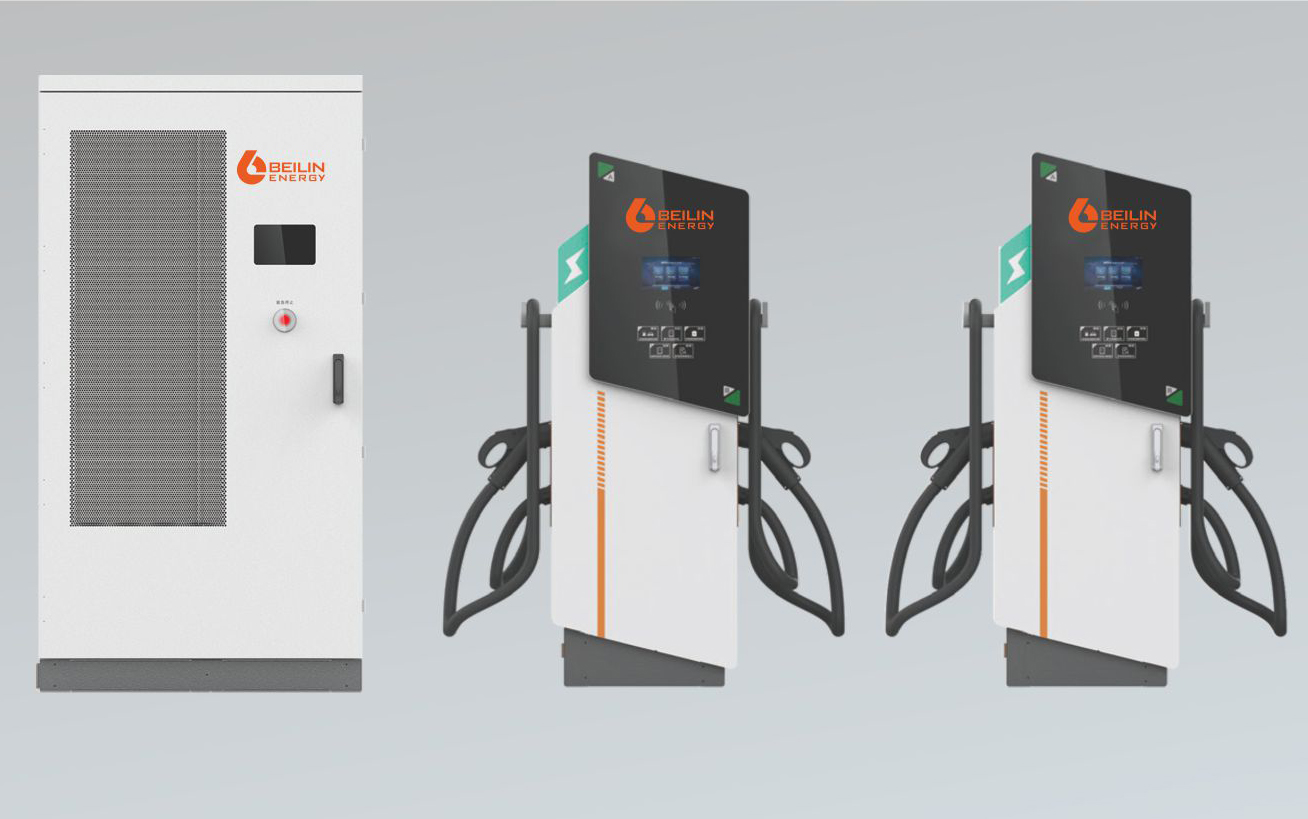
Transforming a traditional gas station into a modern transit hub introduces unique physical challenges. Petrol retailers face strict space limitations under existing canopies. Integrating megawatt-level EV infrastructure requires careful footprint parity. Replacing legacy liquid fuel infrastructure demands precise spatial planning.
Fortunately, satellite terminals match traditional layouts beautifully. You might currently operate a KB Series Fuel Dispenser. Alternatively, your site may feature an XC Series Fuel Dispenser or a heavy-duty XF Series Fuel Dispenser. Replacing these with slim satellite EV posts allows operators to maintain familiar "drive-through" traffic flows. Drivers pull up exactly as they did for liquid fuel. The centralized power banks remain hidden away from the main traffic lanes.
Cable management significantly impacts user experience. Heavy standalone EV units often feature cumbersome, dragging cables. Conversely, split-type satellite posts offer highly refined cable retraction systems. They mimic the familiar user ergonomics of traditional fuel dispensers. The cables feel lighter, stay off the ground, and easily reach vehicle ports. This familiar interaction reduces user frustration and prevents equipment damage.
Grid capacity remains the largest bottleneck for mega-watt charging deployments. Dynamic Load Balancing (DLB) solves this primary constraint gracefully. The centralized DC Charging Stack communicates continuously with your site's main utility meter. DLB limits the total site draw in real-time. You easily avoid utility peak demand penalties. Furthermore, you prevent triggering local transformer limits during busy holiday travel periods.
Savvy operators also explore Solar-Storage-Charging synergy. Integrating your centralized power stack with on-site Battery Energy Storage Systems (BESS) creates incredible grid resilience. Pushing an 800kW output surge stresses any local grid. On-site batteries buffer this immense draw. They discharge stored solar energy during high-demand surges, smoothing out your utility consumption curve.
Operational downtime destroys commercial credibility. High-traffic hubs require strict zero-downtime maintenance protocols. You must evaluate isolated fault architecture. We recommend the following operational fail-safes:
Automatic Fault Isolation: If a single 40kW module fails, the system must electronically bypass it immediately.
Continuous Operation: The remaining modules in the power cabinet must continue charging vehicles at a slightly reduced capacity.
Hot-Swappable Repairs: Technicians must be able to replace the faulty block safely while the broader cabinet remains powered and active.
Remote Diagnostics: The software should automatically log the fault code and alert your local maintenance vendor before the customer even notices a speed drop.
Raw hardware power means nothing without secure, interoperable software routing it. You must mandate OCPP 1.6-J maturity across all vendor submissions. Secure a documented, contractual upgrade path to OCPP 2.0.1. Open protocols completely prevent vendor lock-in. Ensure the power stack supports secure VPN remote testing. Robust Over-the-Air (OTA) update capabilities keep your system secure against emerging software vulnerabilities.
Evaluate the hardware's readiness for ISO 15118. This global standard enables true Plug & Charge functionality. It allows automated authentication and billing without RFID cards or mobile apps. Fleet operators and modern CPOs demand this frictionless experience. Drivers simply plug the cable in, and the software handles the financial transaction instantly.
Regional compliance unlocks crucial deployment subsidies. Do not overlook local hardware certifications. You must match the physical equipment certifications to your specific regional funding requirements. In the United States, look for strict NEVI (National Electric Vehicle Infrastructure) compliance. In Europe, verify appropriate CE marking. Additionally, check for specific local metrology certifications. Accurate, legally certified metrology ensures you can legally bill customers by the exact kilowatt-hour dispensed.
Marketing brochures often highlight theoretical laboratory conditions. Procurement teams must demand real-world stress testing evidence. Require documented proof of environmental endurance. Look for verifiable IP54 or IP65 ratings for dust and water resistance. Request thermal performance data showing how the cooling systems perform in extreme desert heat or freezing winter climates.
Service Level Agreements (SLAs) define your long-term success. An 800kW site serves as a highly critical revenue engine. You cannot afford prolonged offline periods. Assess the vendor’s mean-time-to-repair (MTTR) guarantees strictly. Confirm they maintain a localized stockpile of replacement 40kW power modules. Shipping parts internationally during an outage ruins profitability.
We heavily recommend structured pilot rollout phasing. Do not overcapitalize on day one. Follow these deployment best practices:
Define Minimum Viable Power: Start with a 360kW centralized cabinet rather than the full 800kW.
Deploy Initial Satellites: Install 4 to 6 satellite dispensing posts to handle immediate traffic.
Pre-lay Future Infrastructure: Install all empty conduit pipes and oversized concrete pads necessary for an eventual 800kW expansion.
Monitor and Scale: Use the dashboard analytics to track utilization. Slot in additional power modules only when queue times dictate the need.
Investing in a 360kW to 800kW split-type system requires strategic foresight. It represents a long-term investment in intelligent power routing software and modular scalability. You are not merely purchasing raw hardware. You are purchasing the ability to distribute energy flexibly as market demands shift. Matrix algorithms, wide voltage ranges, and remote central cabinets keep your site competitive.
Your immediate next steps require technical auditing. Audit your existing grid capacity before signing any vendor agreements. Determine exactly what your local transformer can handle today. Next, request detailed, simulated power-sharing curves from your shortlisted manufacturers. Verify exactly how their algorithms distribute power when four vehicles plug in simultaneously. Once you validate these sharing curves, you can issue your Request for Proposal (RFP) with complete confidence.
A: By centralizing power conversion, operators purchase fewer total kilowatts of hardware. Instead of installing four separate 150kW standalone chargers, a 360kW centralized stack dynamically distributes power to four vehicles. You achieve similar charge times for customers at a fraction of the initial hardware expense and utility grid connection cost.
A: Yes. Because the heavy central power cabinet is placed remotely at the site perimeter, the satellite charging posts fit easily under existing structures. They have a similar physical footprint to legacy equipment, making under-canopy installation highly viable without expensive structural remodeling.
A: High-quality systems use a parallel redundant architecture. A failed 30kW or 40kW module is automatically and electronically isolated by the management software. The entire system continues to operate at a slightly reduced capacity until the module is hot-swapped by a technician, ensuring zero complete site downtime.
A: Yes. Modern split-type stacks feature extremely wide voltage outputs, typically reaching up to 1000VDC. This specification ensures maximum charging speeds for both current 400V passenger models and upcoming 800V or 900V heavy-duty commercial vehicles, completely preventing early hardware obsolescence.


