Views: 0 Author: Site Editor Publish Time: 2026-06-01 Origin: Site


Upgrading gas station forecourts is a high-stakes balancing act. Retail operators face intense pressure to maximize lane efficiency while keeping upfront capital expenditures manageable. In high-traffic retail environments, equipment must deliver unyielding reliability and strict metering accuracy. Pumping failures or meter drift directly impact daily revenue. They also damage customer trust over time. Operators need robust machines built for continuous duty cycles. They must avoid excessive maintenance overhead to stay profitable.
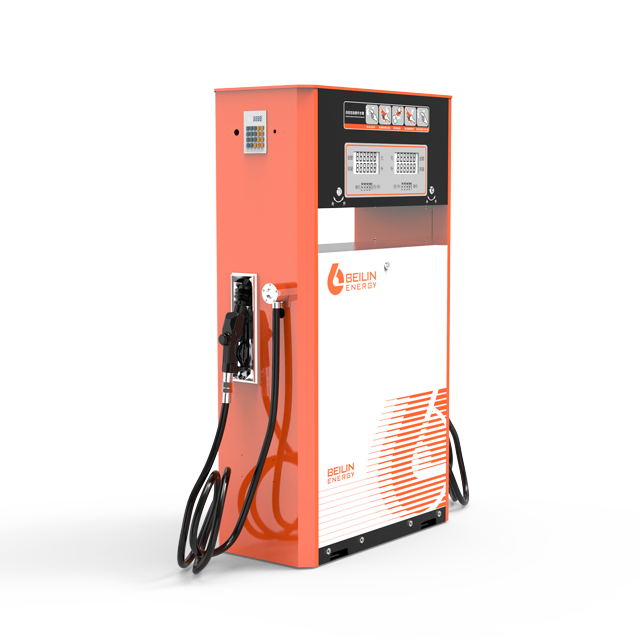
This guide provides an objective evaluation of the KB Series Fuel Dispenser. We review it as a reliable 2-hose service solution for modern gas stations. We explore its technical architecture, compare it against alternative models, and review critical implementation realities. You will also learn how this essential infrastructure aligns with future forecourt integration strategies. These insights will support your final purchasing decisions.
Operational Fit: The KB Series provides a standardized 2-hose architecture optimized for dual-product dispensing and continuous duty cycles.
Strategic Benchmarking: Proper selection requires evaluating internal hydraulics, meter drift rates, and specific site volume requirements against alternative models.
Forecourt Evolution: Deploying traditional fuel infrastructure now requires concurrent site planning for alternative energy integrations, such as DC EV infrastructure.
Risk Mitigation: Successful rollout depends heavily on verifying POS compatibility, regional compliance certifications, and localized aftermarket support.
Gas stations require reliable throughput. They must minimize equipment footprint. This maximizes lane efficiency. Space on a forecourt is inherently limited. Every square foot counts. Operators cannot afford bulky equipment hindering vehicle flow. A standardized 2-hose design solves this. It allows simultaneous service for two lanes. It keeps the physical footprint tight. This drives higher daily vehicle turnover.
You must evaluate internal hydraulics carefully. The KB series relies on specific pumping configurations. Operators typically choose between suction systems and submersible systems. Suction systems place the motor directly inside the dispenser. They pull fuel from underground tanks. They work best for short pipe runs. Submersible systems push fuel from the tank up to the dispenser. They handle longer distances easily. They maintain consistent pressure across multiple lanes. You should choose based on your specific tank placement. Proper alignment here prevents vapor lock. It also guarantees consistent flow rates.
Metering accuracy defines your bottom line. Precision prevents fuel giveaways. The KB series utilizes highly accurate flow meters. Gear and piston meters are common choices. Piston meters offer exceptional accuracy. However, they demand clean fuel lines. Debris can wear the seals. Gear meters handle slight impurities better. All meters experience baseline drift over time. Industry standards tolerate very little deviation. Modern electronic calibration simplifies adjustments. Technicians can correct drift via the controller keypad. They no longer need to dismantle the hydraulic cabinet. This saves massive amounts of time.
Forecourt equipment faces brutal conditions. UV exposure fades displays. Rain and snow attack the chassis. The KB series features resilient material specifications. The chassis typically uses galvanized steel. Powder-coated finishes prevent rust and corrosion. Hose management systems play a vital role. Retractors keep hoses off the ground. This prevents vehicles from running them over. Electronic displays must resist extreme weather. LCD screens need UV-protective layers. This ensures readability under harsh sunlight. Keypads must withstand heavy, repetitive use without failing.
Flow capacity directly impacts queue times. Peak hours demand rapid service. Standard flow rates usually hover around 40 to 50 liters per minute. This suits standard passenger vehicles perfectly. High-flow capabilities reach 70 to 80 liters per minute. They serve light commercial vehicles much faster. Evaluating throughput is crucial. Faster dispensing means shorter lines. Shorter lines mean happier customers. They also mean higher daily volume.
Hardware means little without smart software. The dispenser must talk to your systems. You need seamless controller board compatibility. Standard forecourt controllers manage these interactions. The equipment must support major Point of Sale (POS) protocols. IFSF and standard serial communications are mandatory. Without proper integration, you risk data loss. Shift reconciliation becomes a nightmare. A stable electronic handshake ensures accurate billing.
Fuel theft remains a persistent threat. Physical and digital security are both necessary. The KB series includes built-in safeguards. Pulser tampering is a common theft method. Encrypted pulsers stop this manipulation. The hydraulic cabinet must feature secure locks. Unauthorized access leads to mechanical tampering. Security switches can disable the pump if opened improperly. These mechanisms protect your inventory round the clock.
Routine servicing should not paralyze your site. Extended lane closures destroy profitability. Accessibility of internal components matters greatly. Technicians must reach filters quickly. Valves and belts need regular inspection. A well-designed cabinet allows easy entry. Technicians swap wearable parts fast. They close the cabinet and reopen the lane. This minimizes downtime.
Best Practices for Routine Maintenance:
Replace fuel filters every six months to prevent flow restriction.
Inspect hose breakaway valves monthly for stress fractures.
Test the electronic calibration electronically every quarter.
Clean the POS display screens with non-abrasive solutions weekly.
Site operators must match equipment to demand. Volume demands dictate the right model. Site constraints also force specific choices. The KB series offers a solid middle ground. It balances footprint and performance. However, some sites require different physical dimensions. Others require massive flow volumes. Understanding these constraints helps you pivot correctly.
Space-constrained sites face unique challenges. Urban stations often lack wide lanes. Here, you might consider the XC Series Fuel Dispenser. It offers a compact footprint. It maintains standard retail performance in a smaller chassis. The trade-off usually involves internal space. Maintenance takes slightly longer due to cramped cabinets. The KB series provides a more standard, accessible footprint. You must weigh physical space against maintenance ease.
Commercial transport requires heavy-duty solutions. Standard retail flow rates fail here. If you serve heavy trucks, you need the XF Series Fuel Dispenser. It handles high-capacity dispensing. It features larger internal piping. It uses heavy-duty motors designed for massive volume. The KB series serves standard passenger vehicles efficiently. The XF series serves commercial transport. Placing an XF in a standard lane wastes capital. Placing a KB in a truck lane causes massive delays.
Selecting the right series requires strategic analysis. Operators must balance initial capital cost against operational fit. The matrix below outlines how these series align with different operational goals.
Feature Matrix | KB Series | XC Series | XF Series |
|---|---|---|---|
Primary Application | Standard Retail Forecourts | Space-Restricted Urban Sites | Heavy-Duty Commercial Transport |
Footprint Profile | Standard lane dimensions | Ultra-compact / modular | Large chassis / reinforced |
Flow Capacity | 40 - 70 L/min | 40 - 50 L/min | 80 - 120+ L/min |
Capital Cost Index | Moderate (Baseline) | Moderate to High | High (Industrial grade) |
Installing a 2-hose model requires precise civil work. Underground piping alignment must be exact. Containment sump requirements are strict. These sumps catch accidental leaks beneath the dispenser. Shear valves are critical safety components. They sit at the base of the dispenser. If a vehicle strikes the unit, the shear valve snaps. This immediately shuts off the underground fuel supply. Incorrect installation of shear valves invites catastrophic fire risks. Mechanical readiness dictates the safety of your site.
Regulatory compliance is non-negotiable. You must navigate regional weights and measures approvals. Inspectors will test the metering accuracy rigorously. Environmental compliance governs vapor recovery systems. The equipment must trap harmful emissions. Furthermore, hazardous location certifications are mandatory. ATEX or UL certifications prove the electronics will not ignite fuel vapors. Without these certificates, local authorities will deny your operating permit.
Hardware installation is only half the battle. Software handshakes often cause massive delays. The dispenser must communicate with Automatic Tank Gauges (ATG). It must also sync with the back-office system. If protocols mismatch, the pump will not authorize transactions.
Common Commissioning Steps to Monitor:
Verify physical wiring from the forecourt to the control room.
Establish the basic serial or IP connection to the controller.
Program the specific fueling points and grades in the POS.
Conduct dry runs to ensure authorization and cut-off mechanisms work.
Perform final volume testing with local regulatory inspectors.
You must scrutinize your vendor agreements. Look closely at Service Level Agreements (SLAs). Understand the response time for critical failures. Warranty limitations often hide in the fine print. Wearable parts like nozzles and hoses usually carry shorter warranties. Confirm local parts availability. A great warranty means nothing if parts take weeks to arrive. Localized aftermarket support prevents prolonged downtime.
The traditional gas station model is changing. Long-term site profitability relies on evolution. Operators must transition from fuel-only models. They need to build comprehensive energy hubs. Passenger vehicles are shifting toward electric power. Traditional fuel equipment will remain necessary for decades. However, it must coexist with new energy delivery methods. Planning this transition early saves massive renovation costs later.
Placing EV infrastructure alongside traditional dispensers requires care. Traffic flow planning becomes complex. A fuel customer stays for five minutes. An EV customer stays for twenty minutes or more. You cannot block fuel lanes with charging vehicles. Integrating a DC EV Charging Station demands dedicated parking bays. These bays should sit away from the high-turnover fuel islands. Spatial allocation is your first major hurdle in mixed-energy sites.
Mixed-energy sites face massive electrical load challenges. You must balance the power grid carefully. Traditional fuel dispensers require power for motors and electronics. Canopy lighting draws continuous current. Adding a high-voltage DC Charging Stack changes everything. These stacks demand immense electrical capacity. Upgrading site transformers is often mandatory. You must ensure that heavy charging loads do not cause voltage drops. Voltage drops can damage sensitive fuel dispenser electronics.
Consumers expect seamless transactions. The payment ecosystem must be unified. Traditional fuel equipment uses standard outdoor payment terminals. EV chargers use different software gateways. You must select fuel equipment that supports modern cloud architecture. Eventually, fuel and EV assets will share cloud-based payment gateways. This consolidation simplifies back-office accounting. It also provides a unified loyalty program for all customers. Unified ecosystems define the future of retail energy.
Upgrading your forecourt demands a strategic approach. The equipment you choose dictates your operational efficiency for years.
Actionable Next Steps:
Request detailed engineering drawings from the manufacturer to verify footprint compatibility.
Demand testing certificates for regional weights and measures compliance.
Obtain total landed cost quotes, including shipping, installation, and software integration fees.
Audit your current electrical grid to prepare for future EV charger integrations.
Final Recommendation: The KB Series remains a robust middle-funnel choice for standard retail. It handles continuous duty cycles with proven reliability. Provided that integration assumptions and local compliance are validated prior to purchase, it serves as a highly dependable asset for any modern forecourt.
A: Supply chain realities generally dictate a 4 to 8-week lead time for manufacturing and shipping. Installation usually takes 2 to 3 days per island. Commissioning and software integration can add another 24 to 48 hours, depending on POS compatibility.
A: Yes, but it requires specific internal configurations. Standard hydraulics handle E10 or B5 well. For higher blends like E85 or B20, you must specify compatible seals, filters, and hoses at the time of order to prevent accelerated degradation.
A: Industry benchmarks suggest checking calibration every six months or after dispensing 500,000 liters. Modern electronic calibration features significantly reduce the need for physical mechanical adjustments, keeping meter drift well within the standard +/- 0.3% tolerance.
A: High-quality LCD displays and encrypted pulsers generally last 5 to 7 years under standard environmental conditions. Replacing these components is straightforward, and modular cabinet designs keep replacement labor costs relatively low.