

Views: 0 Author: Site Editor Publish Time: 2026-04-24 Origin: Site


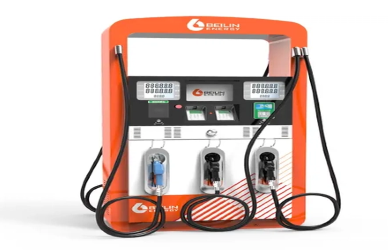
Purchasing fueling equipment is not just a basic hardware procurement task. It functions as a critical bottleneck-resolution decision for your entire operation. Getting this choice right ensures your fleet stays on the move instead of waiting in line.
The wrong configuration easily leads to fleet idle time, massive fuel shrinkage through spillage or theft, and accelerated pump wear. You cannot afford a mismatched system. It drags down daily operational efficiency and increases maintenance pressure over time.
This guide strips away marketing noise. It provides a strictly engineering and operational framework for selecting a fuel dispenser machine. We will evaluate physical site constraints. We will also match flow rates to vehicle capacities. Finally, we will outline the key operational and technical factors that should guide your equipment choice.
Flow Rate matching is critical: Exceeding optimal flow rates causes fuel foaming and splash-back; standard vehicles require 40-50 LPM (10-15 GPM), while heavy commercial fleets need 80-120+ LPM (20-40+ GPM).
Site layout dictates pump technology: Suction pumps are limited by strict physical thresholds (the 15" Hg vacuum limit); exceeding this requires a submersible pump system.
Accuracy and access control matter: Metering accuracy (standard ±0.3%) and authorized access control help reduce fuel loss, improve tracking, and support more reliable daily operations.
Many site operators fall into a common engineering trap. They assume maximum flow equals maximum efficiency. Blindly selecting the highest flow rate actually leads to severe operational hazards.
Pumping heavy-duty rates into a small utility vehicle tank causes aeration. We often call this foaming. Diesel is especially prone to this issue. High-velocity liquid hits the narrow tank baffle and creates bubbles. These bubbles misfire the automatic shut-off sensor on the nozzle. The driver experiences constant stopping, which slows down the fueling process. Over-speccing also causes dangerous splash-back incidents.
You must map your delivery speed to the target vehicle class. Below is a rapid-reference chart outlining standard operational tiers.
Application Tier | Flow Rate (LPM) | Flow Rate (GPM) | Best Suited For |
|---|---|---|---|
Light-Duty | 40 - 50 | 10 - 15 | Passenger vehicles, light vans, small stationary generators. |
Medium-Duty | 80 | ~20 | Agricultural tractors, skid steers, local delivery box trucks. |
Heavy-Duty Commercial | 120+ | 30 - 100+ | Heavy trucking, large fleet depots, high-volume fluid transfers. |
A heavy-duty system becomes mandatory for large fleet depots. In these environments, 15-minute fill times represent the absolute operational ceiling. Extending past this time frame creates yard congestion.
Actionable Step: Audit your fleet today. Size the equipment's flow rate to match the largest tank size representing at least 60% of your daily fueling volume. Do not size for the exception; size for the rule.
The distance between your storage tank and the fuel dispenser dictates your internal hardware. You cannot simply place a unit anywhere on your site without considering fluid dynamics.
Suction pump systems house the motor inside the dispensing unit itself. They pull liquid from the tank.
Best for: Compact sites where the unit sits directly over or immediately adjacent to the tank.
The Engineering Limit: Suction pumps face a hard ceiling bound by atmospheric pressure. They rely on creating a vacuum. If vertical lift and pipe friction pressure drop exceed a vacuum of 15" Hg (inches of mercury), the system fails. The liquid will boil at ambient temperature. We call this cavitation. It destroys gears and halts delivery.
Submersible systems place the motor directly inside the fuel tank. Instead of pulling liquid, they push it forward through the piping.
Best for: Sprawling commercial sites, multi-island layouts, or deep underground setups.
Advantage: Pushing fluid eliminates the 15" Hg physical limitation entirely. It also reduces the above-ground footprint. Furthermore, you can use one single submersible motor to supply multiple lanes simultaneously. This reduces overall hardware redundancy.
The internal "heart" of the equipment determines maintenance intervals and fluid compatibility. Different designs cater to different operational stresses. Understanding these mechanisms helps you forecast long-term durability.
Gear Pumps: These remain highly cost-effective and remarkably durable. Interlocking gears create the vacuum necessary for fluid transfer. They stand out as the best option for standard-flow gasoline and diesel applications.
Vane Pumps: Sliding vanes rotate inside a cam ring. This design offers quieter operation. It also provides minimal fluid pulsation. You gain excellent longevity for medium-to-high flow applications. Vane systems handle slight wear better because the vanes slide outward to maintain seals.
Piston Pumps: These units utilize reciprocating pistons to move liquid. They offer supreme precision and high pressure tolerance. Engineers specify piston designs for high-volume commercial stations requiring absolute metering accuracy under heavy daily loads.
Turbine Pumps: Turbine designs use centrifugal force rather than positive displacement. They are strictly reserved for low-viscosity liquids, like aviation fuel. High-throughput truck stops also utilize them to push massive volumes rapidly.
Do not compromise on the core mechanism. Selecting a light-duty gear setup for a 24/7 commercial truck stop guarantees premature mechanical failure.
Footprint optimization drives modern site planning. You must evaluate lane efficiency against your available space.
Choosing between single, dual-hose, or multi-product configurations impacts your concrete footprint. A single multi-product unit saves valuable island space. It also reduces overhead canopy costs. One machine can serve multiple grades, such as regular diesel, unleaded, and bio-blends like B20 or E40. This consolidated approach limits underground trenching requirements.
You must match power requirements to your specific environment. Do not assume universal compatibility.
Fixed Grid (AC 220V/415V): This remains the standard for permanent industrial sites and retail stations. It delivers consistent, high-amperage power for continuous operation.
Mobile/Off-Grid (DC 12V/24V): Service trucks require mobile solutions. These units wire directly to the vehicle battery. They empower fuel transfer tanks in remote agricultural fields or construction sites.
Pneumatic (Air-driven): Highly combustible environments, like underground mining operations, demand intrinsic safety. Electrical sparking poses a catastrophic risk. Air-driven systems remove electricity from the equation entirely.
Reliable physical protection and metering precision are essential for long-term operation. Hardware toughness and measurement consistency directly affect daily control and site safety.
Modern digital volumetric meters must maintain a ±0.3% accuracy rate. Calibration drift can quietly create tracking problems and product loss. Consider a site moving 10,000 gallons a month. A mere 1% drift equals 100 gallons of unbilled or untracked product. You should specify digital meters capable of tight, repeatable calibration to reduce invisible losses.
Your equipment lives in a hazardous, high-traffic zone. You need specific physical safeguards.
Safety Component | Primary Function | Risk Mitigated |
|---|---|---|
Breakaway Couplings | Automatically snap and seal the hose. | Prevents spills if a driver pulls away while connected. |
Shear Valves | Instantly cut off the supply line at the base. | Stops tank drainage if a vehicle crashes into the unit. |
IP65 Rated Housings | Seal internal electronics from intrusion. | Protects motherboards against dust and heavy rain washdowns. |
Skipping these components exposes your business to environmental fines and total loss of inventory during an accident.
Operators frequently focus solely on the initial sticker price. A better evaluation requires analyzing operational losses, maintenance demands, and long-term serviceability.
Fleet managers often lose inventory to unauthorized access. Idling waste also contributes heavily to this loss. You can reduce this by integrating LAN-connected fleet management systems. Modern units utilize RFID tags, keypad entry, or AI-driven monitoring. These features turn a basic dispensing point into a more controlled and traceable fueling node. You know exactly who took what, when, and for which vehicle.
Look carefully for ease of serviceability. Downtime kills efficiency. Prioritize designs featuring front-access panels. Check for protected mainboards mounted away from moisture paths. Units offering simple one-step electronic calibration significantly reduce your reliance on third-party technicians.
Before contacting a manufacturer, build a precise site profile. Document your daily throughput in gallons or liters. Measure the exact pipe distance from the tank to the proposed island. Determine your available power supply. Present these three specific metrics to vendors. This ensures you receive an accurate, reliable quote rather than a generic sales pitch.
Choosing the correct hardware requires balancing fluid dynamics with your daily operational throughput.
Avoid over-speccing flow rates for small fleets to prevent dangerous splash-back and frustrating sensor misfires.
Respect the strict physical limits of suction pumps. Transition to submersible systems if your piping run is too long.
Prioritize units offering tight digital calibration and integrated access control to reduce product shrinkage.
Next Step: Audit your site’s tank-to-dispenser distance right now. Calculate your peak-hour fueling volume to initiate an informed, data-driven vendor evaluation.
A: It depends heavily on your vehicle class. Light to standard vehicles require 40-50 LPM (10-15 GPM) to prevent foaming. Heavy trucking fleets need 80-120+ LPM (20-40+ GPM) to maintain fast turnarounds. Always match the flow rate to the specific tank capacities you service daily.
A: You must choose a submersible system if you exceed the 15" Hg vacuum limit. If the pipe run is too long or the vertical lift is too high, a suction unit will cavitate. Submersible motors push the liquid, completely bypassing this atmospheric limitation.
A: Best practices dictate monthly internal accuracy checks against the standard ±0.3% metric. You should also schedule a comprehensive professional calibration annually. This routine ensures regulatory compliance, maintains tight inventory tracking, and prevents silent product loss over time.


